

















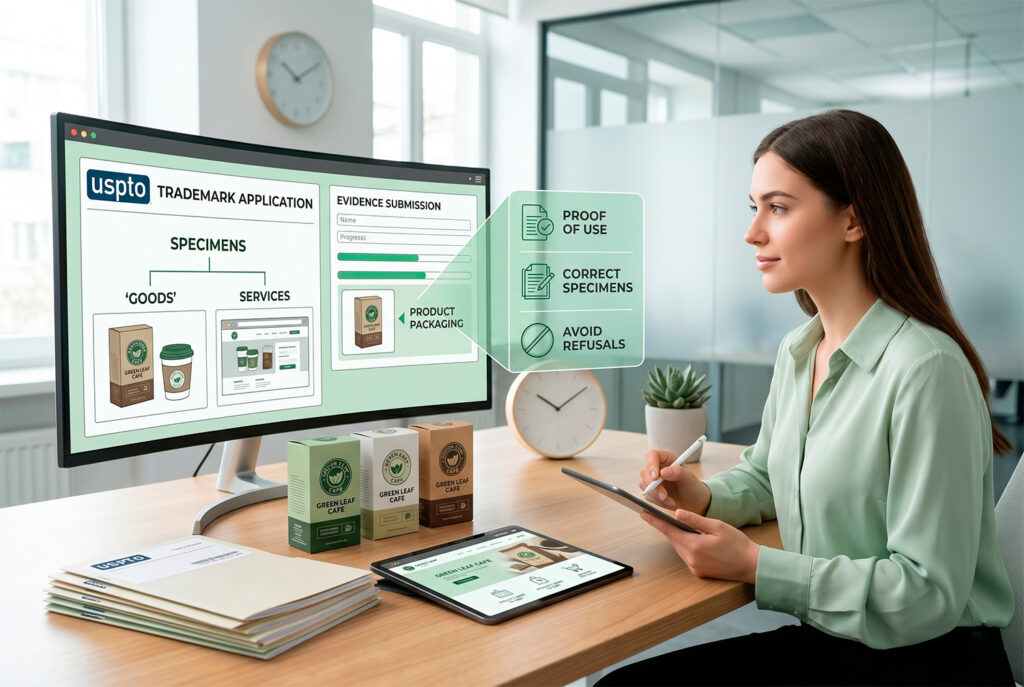
One of the most common reasons for USPTO trademark filing delays is an unacceptable specimen.
Many applicants believe that uploading a logo, mockup, or social media graphic is enough to prove trademark use. In reality, the USPTO applies specific specimen requirements depending on whether the application covers goods or services.
For businesses filing US trademark applications, understanding what qualifies as an acceptable specimen is important because specimen refusals can delay registration, increase legal costs, and sometimes force applicants to refile.
Whether you operate an e-commerce store, SaaS platform, consulting business, online brand, or product company, specimen preparation should be treated as part of the trademark strategy rather than a last-minute upload.
What Is a Trademark Specimen?
A trademark specimen is evidence showing how a trademark is actually used in commerce.
The USPTO requires specimens to verify that the trademark is connected to real commercial activity and not merely reserved for future use.
In practice, the specimen demonstrates that consumers encounter the trademark while purchasing goods or using services.
The specimen requirements differ depending on:
- whether the application covers goods or services,
- the type of business,
- the filing basis,
- the nature of commercial use.
Why Trademark Specimens Matter
Trademark specimens play a major role in intent-to-use applications and maintenance filings.
The USPTO reviews specimens to confirm:
- genuine commercial use,
- proper trademark placement,
- connection between the mark and the goods or services,
- compliance with federal trademark rules.
Weak or incorrect specimens may create:
- Office Actions,
- refusal risks,
- delays,
- additional legal costs,
- possible abandonment.
For growing businesses, specimen mistakes can become expensive because branding, packaging, advertising, and product launches may already be underway before the refusal arrives.
Acceptable Trademark Specimens for Goods
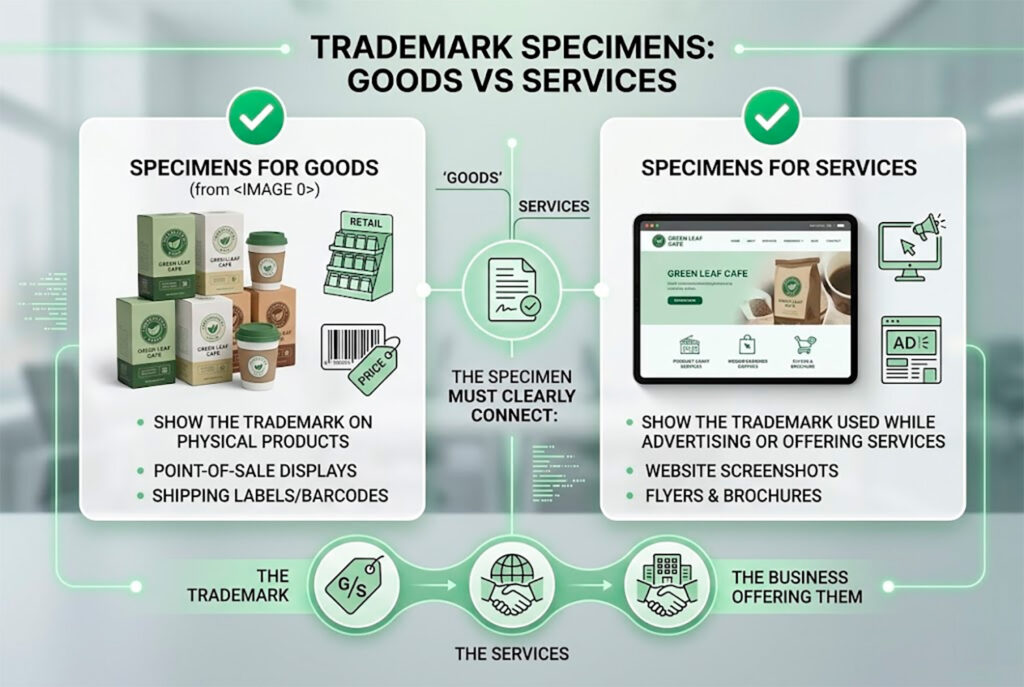
For goods, the USPTO generally expects the trademark to appear directly on:
- the product,
- packaging,
- labels,
- tags,
- displays associated with the goods.
The key requirement is that the specimen must create a clear association between the trademark and the physical goods being sold.
Common Acceptable Specimens for Goods
Product Packaging
Packaging displaying the trademark is one of the strongest specimen examples.
Examples may include:
- boxes,
- bottles,
- pouches,
- containers,
- retail packaging.
Product Labels and Tags
Labels attached to products are commonly accepted.
This may include:
- sewn clothing tags,
- adhesive labels,
- product stickers,
- hang tags.
Product Photographs
Photographs showing the trademark directly on the product may qualify.
For example:
- logos printed on products,
- branded tools,
- branded electronics,
- branded accessories.
E-Commerce Product Listings
The USPTO may accept online product pages if they contain:
- the trademark,
- purchasing information,
- pricing or add-to-cart functionality,
- the goods themselves.
Simple advertising without purchasing capability may not be sufficient for goods.
Examples of Unacceptable Specimens for Goods
The USPTO frequently refuses specimens for goods when applicants submit:
- digital mockups,
- computer-generated packaging,
- decorative use without trademark function,
- social media graphics,
- advertisements lacking purchasing functionality.
A common mistake occurs when businesses upload concept art or marketing materials before actual sales begin.
The USPTO generally requires real commercial use rather than future intent.
Acceptable Trademark Specimens for Services
Trademark specimens for services work differently because services are intangible.
The USPTO usually expects specimens showing the trademark used while advertising or offering the services.
The specimen should clearly connect:
- the trademark,
- the services,
- the business offering them.
Common Acceptable Specimens for Services
Website Screenshots
Website pages are among the most common service specimens.
Strong website specimens usually contain:
- the trademark,
- description of the services,
- contact information,
- booking or inquiry functionality.
Advertising Materials
Brochures, flyers, and marketing materials may qualify if they clearly advertise the services.
Online Booking or Ordering Pages
Pages allowing customers to schedule, purchase, or request services often work well as service specimens.
Service Invoices or Business Documents
Certain invoices, proposals, or service-related documents may also qualify if they display the trademark in a commercial context.
Examples of Unacceptable Specimens for Services
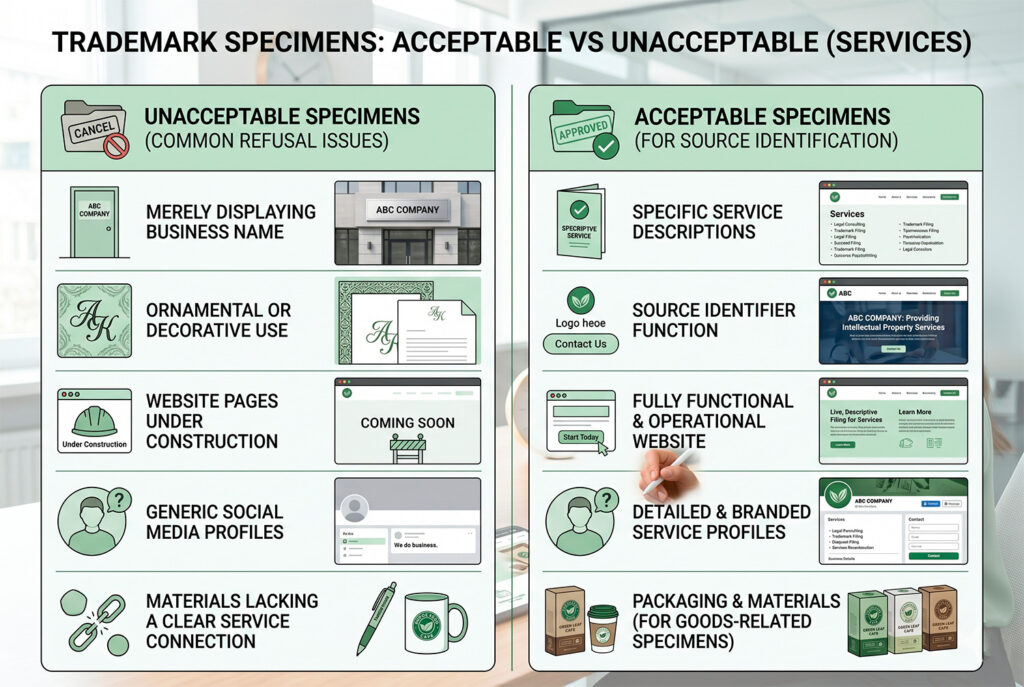
Common refusal issues for service specimens include:
- merely displaying the business name without describing services,
- ornamental or decorative use,
- website pages under construction,
- generic social media profiles,
- materials lacking a clear service connection.
The USPTO may reject specimens that fail to show the trademark functioning as a source identifier.
Trademark Specimens for E-Commerce Businesses
E-commerce businesses often face specimen issues because many online stores rely heavily on digital branding.
For product-based e-commerce brands, strong specimens usually include:
- online product pages,
- checkout functionality,
- pricing information,
- product packaging photographs.
For digital services and SaaS companies, specimens commonly include:
- landing pages,
- subscription pages,
- software dashboards,
- online service ordering pages.
The key factor is demonstrating real commercial activity rather than promotional intent alone.
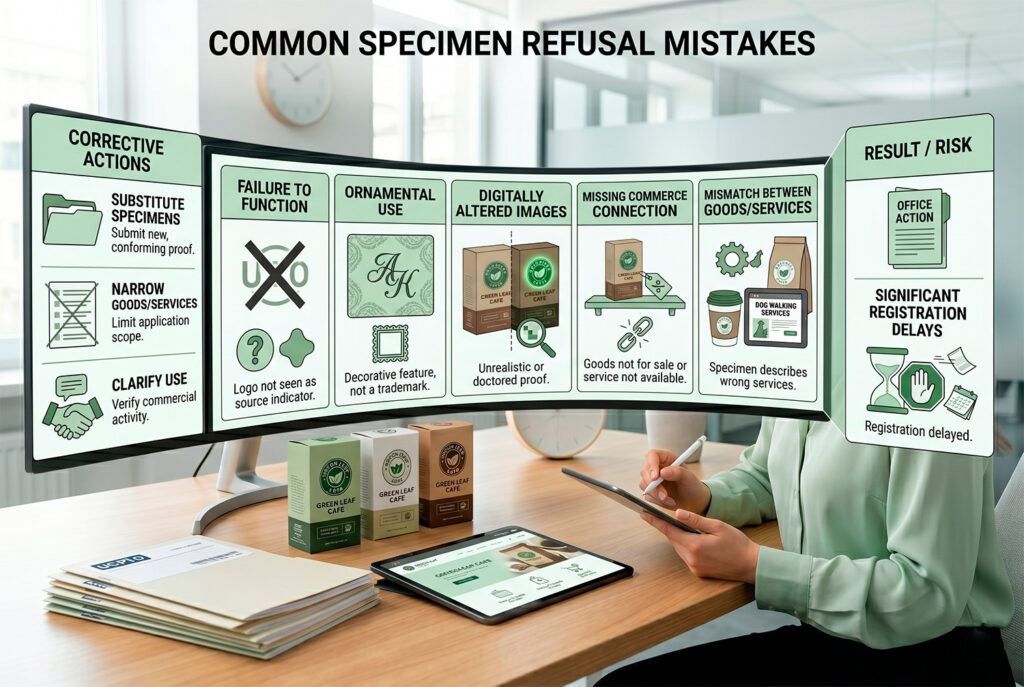
Specimen Refusals and USPTO Office Actions
If the USPTO believes the specimen is unacceptable, the examining attorney may issue an Office Action.
Common refusal reasons include:
- failure to function as a trademark,
- ornamental use,
- digitally altered images,
- missing commerce connection,
- mismatch between goods/services and specimen.
Applicants may sometimes respond by:
- submitting substitute specimens,
- narrowing goods and services,
- clarifying commercial use.
However, correcting specimen problems later can delay registration significantly.
Decorative Use vs Trademark Use
One of the most misunderstood trademark concepts is ornamental or decorative use.
A design placed decoratively on merchandise may not automatically function as a trademark.
For example:
- large decorative text on clothing,
- slogans used as artwork,
- graphics functioning only as decoration.
The USPTO looks for source-identifying trademark use rather than purely aesthetic presentation.
Why Timing Matters for Trademark Specimens
Specimens must reflect actual use in commerce at the relevant filing stage.
For intent-to-use applications, specimens are typically submitted later through:
- an Amendment to Allege Use, or
- a Statement of Use.
Filing too early with placeholder materials may create refusal risks.
Businesses launching new brands should therefore coordinate:
- product launches,
- packaging,
- websites,
- marketing,
- trademark filing strategy.
Why Trademark Search Still Matters Before Filing
Even though specimens become important later in the application process, trademark search remains essential at the beginning.
A professionally prepared specimen cannot solve underlying trademark conflicts.
Businesses that skip trademark search may still face:
- USPTO refusals,
- oppositions,
- infringement claims,
- marketplace conflicts,
- rebranding costs.
For many businesses, trademark strategy works best when search, filing, specimens, and enforcement planning are handled together.
How Bonamark Can Help
Preparing trademark specimens involves more than uploading screenshots.
Applicants should evaluate:
- whether the trademark functions properly,
- whether commercial use is sufficient,
- whether the specimen matches the identified goods or services,
- whether filing timing is appropriate,
- whether the evidence aligns with USPTO expectations.
Bonamark can help businesses review trademark specimens, evaluate filing readiness, prepare trademark applications, and reduce the risk of avoidable USPTO refusals.
FAQ
What is a trademark specimen?
A trademark specimen is evidence showing how a trademark is actually used in commerce for goods or services.
What specimens are acceptable for goods?
Acceptable specimens for goods may include packaging, labels, product photographs, tags, and online product listings with purchasing functionality.
What specimens are acceptable for services?
Acceptable service specimens may include website screenshots, advertising materials, booking pages, brochures, and service-related business documents.
Can I submit a logo mockup as a specimen?
Usually no. The USPTO generally requires real commercial use rather than digital mockups or concept designs.
Why did the USPTO refuse my specimen?
Common refusal reasons include ornamental use, lack of purchasing functionality, digitally altered images, or insufficient connection between the trademark and the goods or services.
What is ornamental trademark use?
Ornamental use happens when a design functions only as decoration rather than identifying the commercial source of goods or services.
- Trademark registration
- Trademark Filing
- Statement of Use
- Trademark Specimens
Trademark services in the United States


