Polish National Bank Check: 07 Oct 2026 08:55 UTC Latest change: 05 Oct 2026 22:36 UTC API: CurrencyRate
Disclaimers. This plugin or website cannot guarantee the accuracy of the exchange rates displayed. You should confirm current rates before making any transactions that could be affected by changes in the exchange rates.
⚡You can install this WP plugin on your website from the WordPress official website: Exchange Rates🚀
3 out of 10 trademark applications get rejected due to conflicts with existing marks. Avoid costly mistakes — check yours now
Bonamark is a trusted online platform designed to simplify and streamline international trademark management and registration. Our expertise and support makes protecting your brand across multiple countries easier, faster, and more efficient.
We recommend starting with a Trademark Search. A report prepared by our attorneys will help you determine if your trademark can be registered. While this service is optional, our experience shows that clients who begin with a search have the highest probability of successfully registering their mark.
Do you have any questions about Trademark? Book an appointment with our expert and get a free 20-minute consultation.
Some countries have considerably higher fees than the others. The price depends on the official fees, determined by the Trademark Office of this country and unrelated to the territory of the country or its population.
As for 2025 Bonamark completely restructured its operations to serve clients with complex legal challenges, such as domain disputes, litigations, franchises and negotiations. As almost 10 years ago, today we stand on quality, honesty and reliability.
Bonamark began in 2016 with one clear objective: to do all of the hard legal work for business owners and allow them to focus on their projects and start-ups.
Bonamark Team
Get access to Bonamark’s international team of legal experts and local attorneys who overdeliver on every case.
Have questions about trademarks? Book a free 20-minute consultation with one of our experts and get clear, practical answers tailored to your business.
Work with a local US trademark attorney to prepare and file your trademark application. Take advantage of our easy, fast & efficient trademark registration process. No hidden fees.
Experienced attorneys in the USA
Competitive prices with zero hidden fees
7.500+ happy clients & many positive reviews
Free consultations with no obligations
Personal account manager dedicated to your success
Estimate the total cost of registering your trademark. Your application is prepared and filed by a licensed attorney.
Filing in 1 class:
Extra classesEach extra class adds Total classes: 1
Are you currently using the trademark in the U.S.?
i
Use in the United States means your products are available in the US or you have made first sales there. You must declare this when filing.
Do you need a Risk Assessment?
i
A Risk Assessment is necessary to evaluate the possibility of registering your trademark.
Summary
Estimated total registration cost:
Get your personalized offer by email
Enter your email and we'll send this estimate plus next steps from a licensed attorney.
ADDITIONAL BONAMARK SERVICES:
Learn more about our services & prices in the United States
Check if your trademark is available for registration.
The results will resolve any doubts regarding your mark and give you confidence in the outcome of the registration process.
from
TRADEMARK MONITORING
Our AI search will constantly monitor Trademark Registers for any similar marks.
We'll manually check the results and regularly deliver reports of any conflicting marks allowing you to enforce your rights.
from
TRADEMARK RENEWAL
Request a cost-effective trademark renewal in 150+ countries, don’t let your trademark expire.
Contact us for our online renewal process.
from
Trademark application form for the USA
Submit an online form in order to request your trademark registration in United States. You can pay later or have your personal consultant check your form first.
Request your mark in 4 simple steps
Contact info
Trademark info
Additional services
Review and submit
Additional services
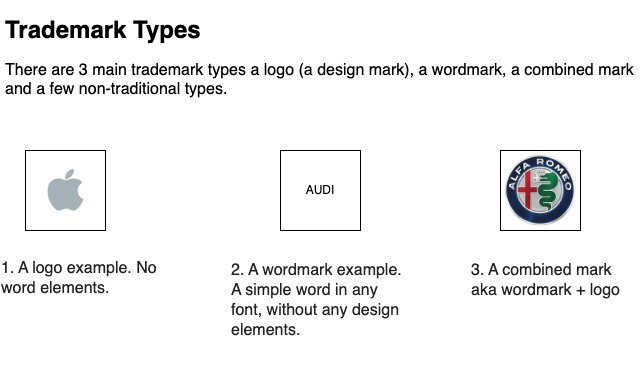
When filing a trademark in any country you should decide if you filing a trademark, a logo or a combined mark.
Would you like to request our Extensive Study to check if your mark is available? (3 business days)
Well done! You did a great job!
Would you like to submit your payment now or should our consultant check your application before your payment? Please note that if your application contains more than 1 class an additional payment per extra class will be required.
Application details:
United States
Thank you for your request!
Your request is being processed. Our specialist will send the details to the specified email within the next working hours. Thank you for choosing Bonamark
WHAT OUR CLIENTS SAY
Verified reviews from companies we have helped protect their brands.
Bonamark and its whole team are professionals, they made everything smooth and easy, just the way one as entrepreneur need. I will recommend it 100%
Sergei
★★★★★
Just received our new trademark registration certificate in Canada. All worries are taken care of by Bonamark. Very smooth experience all in all. Highly recommended.
Michael Alec Charter
★★★★★
Bonmark helped me secure 2 trademarks in the US. They were very fast and effective and I woul use them again.
Rupa Umesh
★★★★★
Bonamark team is meticulous, diligent and methodical and go above and beyond to help the Customer.
BELIEF STORE LLC
★★★★★
Excellent attention and personalized and very professional service. I recommend this service
CHONG YUET SARAH
★★★★★
Professional service and timely follow-up. Trustworthy!
Bonamark Podcasts
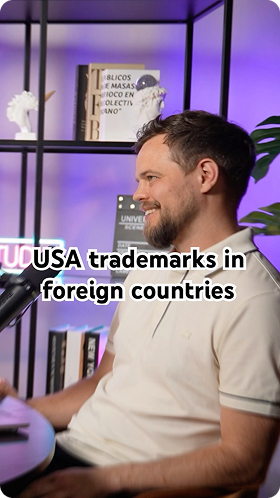
Is a USA trademark effective abroad?
Here is my response to the question of whether a US trademark is valid abroad.
Trademark protection in the United States is primarily built around federal registration. The country follows a first-to-use system, meaning that rights arise from actual use of a mark in commerce, but registration is the key tool for enforcing and protecting those rights at scale.
Federal trademarks are registered through the United States Patent and Trademark Office (USPTO) and provide nationwide protection across all 50 states, the District of Columbia, and U.S. territories.
State trademark registration exists as a secondary option, designed mainly for local or early-stage businesses or when you can’t register federally.
This page explains how trademark registration works in the United States, how federal and state protection differ, and how Bonamark supports businesses throughout the entire trademark lifecycle.
Federal Trademark Registration in the United States (USPTO)
Federal trademark registration is the primary and most reliable way to protect a brand in the U.S.
A federally registered trademark:
applies nationwide, not just in one state
allows enforcement in federal courts
provides public notice of ownership
enables the use of the ® symbol
Filing Bases for US Trademarks
When filing a trademark application with the USPTO, one of the following bases must be selected:
Use in Commerce
The trademark is already used in U.S. commerce for the listed goods or services.
Intent to Use
The trademark is not yet used but will be used in the future. Registration is completed only after use is proven.
Foreign Registration / International Registration
Available under international agreements, provided that the U.S. application matches the foreign registration.
Choosing the correct filing basis is critical. An incorrect basis often leads to refusals, delays, or additional costs later in the process.
Scope and Term of Protection
A U.S. federal trademark:
covers all U.S. states and territories
is valid for 10 years from the registration date
remains active as long as renewal and use requirements are met
USPTO Trademark Filing Fees and Costs
The United States applies a per-class fee system based on the Nice Classification of goods and services.
Official USPTO Filing Fees
USD $350–$550 per class, depending on the filing option selected.
An additional surcharge applies for non-standard goods or services descriptions.
These are government fees only and are paid directly to the USPTO.
Professional service fees (for preparation, strategy, and filing support) are separate and depend on the complexity of the application.
Understanding fee structure upfront helps avoid unexpected costs during examination or post-filing stages.
State Trademark Registration in the USA
State trademark registration provides limited protection within a single state. It may be useful for businesses operating only locally, but it does not replace federal registration.
When State Registration May Make Sense
State registration may be appropriate when:
your business operates only in one state and does not plan to expand soon
you need limited protection as a temporary step
your mark cannot be registered federally due to a conflict at the USPTO level
Even in these cases, many businesses still choose federal registration for broader enforcement and long-term value.
Federal vs State Trademark Registration
Federal registration provides nationwide rights and stronger enforcement tools. State registration is narrower and can be easier or faster in some jurisdictions, but it is limited by geography.
Trademark Search in the United States
A strong trademark search is one of the most important steps before filing. It reduces the risk of refusals, oppositions, and costly rebrands later.
What a Proper Search Covers
A proper search includes:
USPTO database checks for identical and similar marks
state trademark registries where relevant
common-law use (unregistered marks) through online and marketplace research
Search quality matters. Missing an existing conflict can lead to refusals, legal disputes, and lost investment.
US Trademark Registration Process (Overview)
Registering a trademark in the United States is a structured process with multiple stages, including filing, examination, publication, and registration.
The exact timeline depends on your filing basis, goods/services classification, and whether the USPTO issues objections (Office Actions) or receives opposition from third parties.
Common Trademark Mistakes in the USA
Common mistakes that lead to refusals or delays include:
choosing a mark that is too similar to an existing registration
filing under the wrong basis (use vs intent-to-use)
selecting incorrect classes or overly broad goods/services descriptions
submitting an improper specimen of use
Many of these issues can be avoided with proper preparation and strategic review before filing.
Office Actions and USPTO Examination
After filing, the USPTO examines the application for legal compliance and conflicts with existing marks. If the examiner finds issues, they issue an Office Action.
Office Actions may involve:
likelihood of confusion refusals
descriptiveness refusals
specimen or filing-basis problems
clarification requests for goods/services descriptions
Responding correctly and on time is essential to keep the application moving forward.
Trademark Renewal and Maintenance in the United States
U.S. trademarks require ongoing maintenance. Missing deadlines can result in cancellation, even if the mark is still in use.
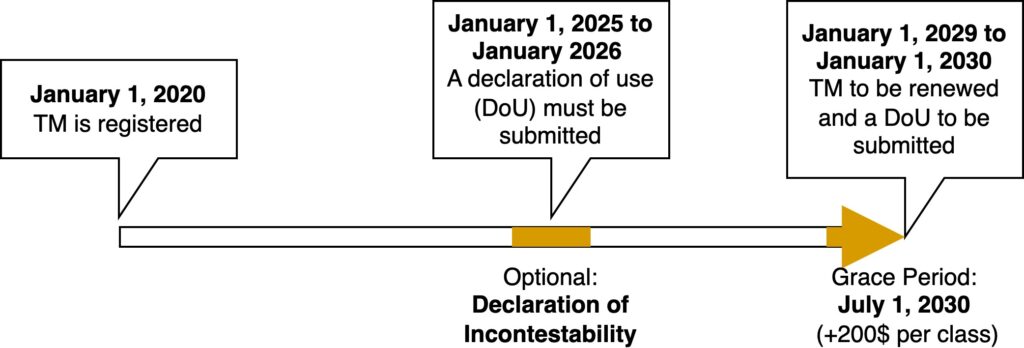
A U.S. trademark is valid for 10 years from the registration date. To keep it active, a Declaration of Use must be filed between the 5th and 6th year, and renewals must be submitted every 10 years.
Trademark Cancellation and Disputes
A registered trademark may be cancelled for reasons such as non-use, likelihood of confusion, genericness, or fraud. Cancellation proceedings are handled through formal legal processes.
Additional Trademark Services in the United States
Businesses often need more than registration alone. Additional trademark services may include:
trademark monitoring
renewal and maintenance filings
office action responses
trademark assignment and ownership changes
How Bonamark Helps with US Trademark Registration
Bonamark offers structured guidance throughout the trademark process, including:
filing strategy development
class and goods selection support
compliance with USPTO requirements
post-registration monitoring and renewals
This approach reduces procedural risk and helps ensure long-term brand protection.
Call to Action
Contact Bonamark to ensure your trademark is filed correctly.
Our consultants can guide you through federal and state trademark registration in the United States.
USA TRADEMARK FAQ
Do I need to register a trademark to do business in the United States?
Trademark registration is not legally required to operate a business in the United States. However, without registration, trademark protection is limited and harder to enforce. Federal registration provides nationwide rights and stronger legal protection.
What is the difference between federal and state trademark registration in the USA?
Federal trademark registration provides nationwide protection across all U.S. states and territories and is issued by the United States Patent and Trademark Office (USPTO). State trademark registration protects a mark only within one specific state.
How much does it cost to register a trademark in the USA?
The official USPTO filing fee ranges from $350 to $550 per class, depending on the filing option selected. Additional costs may apply for multiple classes or non-standard goods and services descriptions.
How long does trademark registration take in the United States?
Trademark registration in the United States typically takes between 8 and 14 months. The timeline depends on the filing basis, examination complexity, and whether objections or oppositions arise.
Can a foreign company register a trademark in the USA?
Yes. Foreign companies and non-U.S. residents may register trademarks in the United States. Applications can be filed based on use in commerce, intent to use, or foreign registration.
Can I register a trademark in the USA before using it?
Yes. The United States allows Intent-to-Use trademark applications. Registration is completed after the applicant submits acceptable proof of use in U.S. commerce.
How long does a U.S. trademark last?
A U.S. trademark is valid for 10 years from the registration date. To keep it active, a Declaration of Use must be filed between the 5th and 6th year, and renewals must be submitted every 10 years.
Can a U.S. trademark be cancelled after registration?
Yes. A registered trademark may be cancelled for reasons such as non-use, likelihood of confusion, genericness, or fraud. Cancellation proceedings are handled through formal legal processes.
 3 out of 10 trademark applications get rejected due to conflicts with existing marks. Avoid costly mistakes —



















 TRADEMARK STUDY
  TRADEMARK MONITORING
  TRADEMARK RENEWAL