

















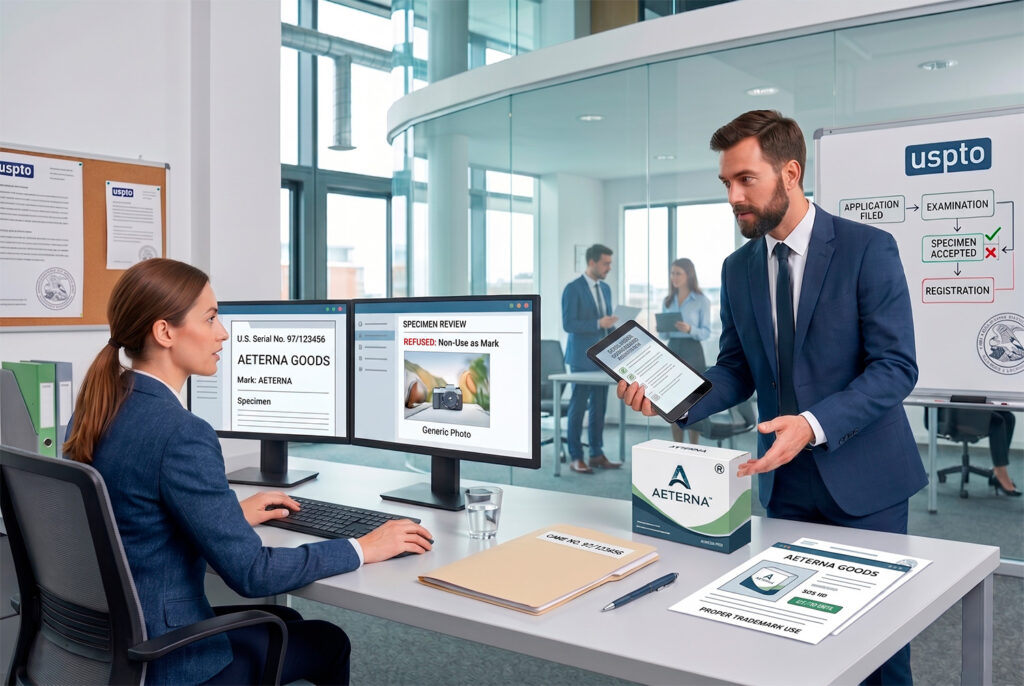
A specimen refusal happens when the USPTO determines that submitted trademark evidence does not properly show real trademark use in commerce. Common refusal reasons include ornamental use, digitally altered mockups, weak website screenshots, missing purchasing functionality, and specimens that do not match the listed goods or services.
Many businesses run into specimen problems not because their brand name is necessarily weak, but because their evidence does not meet USPTO expectations. Applicants often assume that any logo image, product photo, or website screenshot automatically proves trademark use. In reality, the USPTO reviews whether the mark is used as a trademark in a real commercial setting.
For businesses investing in branding, packaging, product launches, e-commerce stores, and marketing campaigns, specimen refusals can create expensive delays and additional legal costs. Reviewing specimens before filing is often easier than trying to repair the application after an Office Action.
What Is a Trademark Specimen Refusal?
A trademark specimen refusal is a USPTO objection stating that the submitted specimen does not properly show use of the mark in commerce. The issue may involve the specimen itself, the way the mark appears, or the relationship between the specimen and the goods or services listed in the application.
The USPTO may refuse a specimen if the examining attorney finds that:
- the mark does not function as a trademark,
- the specimen is digitally altered or appears to be a mockup,
- the specimen lacks a clear commercial connection,
- the specimen does not match the identified goods or services,
- the use appears ornamental rather than source-identifying.
The USPTO provides official guidance on specimen refusals, including why certain evidence may be rejected and how applicants may respond.
Why Specimen Refusals Matter
A specimen refusal can delay registration for months. For businesses preparing product launches, marketplace expansion, licensing deals, or investor presentations, delays in trademark registration can create practical commercial risk.
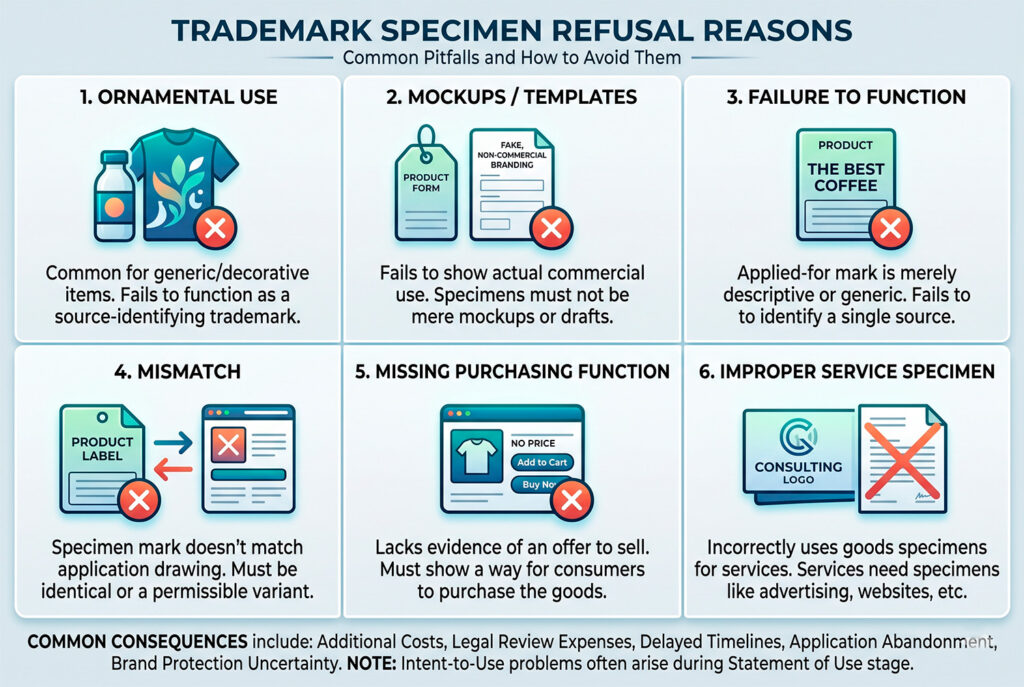
Common consequences include:
- additional costs,
- legal review expenses,
- delayed registration timelines,
- risk of application abandonment,
- uncertainty around brand protection.
For intent-to-use applications, specimen problems often appear during the Statement of Use stage, when the applicant must prove actual use in commerce.
Common Specimen Refusals at a Glance
| Refusal Type | Common Cause | Practical Way to Reduce Risk |
|---|---|---|
| Ornamental use | The mark appears as decoration rather than a brand identifier. | Use labels, tags, packaging, or source-identifying placement. |
| Mockup specimen | The evidence appears digitally created or artificially placed. | Use real product photos, live web pages, or actual packaging. |
| Failure to function | The wording looks informational, generic, or promotional. | Present the mark consistently as a brand. |
| Goods/services mismatch | The specimen does not support the listed goods or services. | Review the specifications before filing. |
| Weak e-commerce specimen | The page lacks pricing, purchasing, or ordering information. | Capture a live product page with buying functionality. |
Refusal #1: Ornamental or Decorative Use
One of the most common USPTO refusals involves ornamental use. The issue often appears when wording, artwork, or a design is used decoratively rather than as a brand identifier.
Examples may include:
- large decorative text on clothing,
- slogans displayed as artwork,
- graphics printed across apparel,
- product designs that look purely aesthetic.
The USPTO has separate guidance on ornamental use because consumers may view some wording or designs as decoration rather than as a source indicator.
How to Avoid Ornamental Refusals
Businesses can reduce ornamental refusal risks by using trademarks in places where consumers expect to see brand indicators, such as tags, labels, packaging, product pages, or consistent brand placement near the goods.
For apparel brands especially, placement strategy matters. A mark on a neck label, hang tag, or branded packaging may support source-identifying use more clearly than a large decorative slogan across the front of a shirt.
Refusal #2: Digitally Altered or Mockup Specimens
The USPTO often refuses specimens that appear digitally created or artificially generated. This can happen when the mark appears to be placed on a product image only for filing purposes.
Problematic examples include:
- Photoshop mockups,
- computer-generated packaging,
- edited website screenshots,
- placeholder branding images,
- renderings that do not show real commercial use.
How to Avoid Mockup Refusals
Use evidence from real commercial activity. Stronger specimens may include live website screenshots, real marketplace listings, actual packaging, product labels, or photographs of branded goods offered for sale.
Authenticity is more important than visual perfection. A simple real product photo may be stronger than a polished mockup that does not reflect actual use.
Refusal #3: Failure to Function as a Trademark
A specimen may be refused if the wording or design does not function as a trademark. This often happens when the wording appears informational, generic, promotional, or merely descriptive rather than source-identifying.
The key question is whether consumers would understand the wording as a brand, not simply as a message, slogan, feature description, or decorative phrase.
How to Avoid Failure-to-Function Refusals
Applicants should present the mark consistently as a brand. This may include logo placement, repeated brand use, source-identifying positioning, and a clear connection between the mark and the goods or services.
Refusal #4: Goods and Services Mismatch
A specimen must support the specific goods or services listed in the trademark application. A mismatch can occur when the application identifies one type of offering, but the specimen shows something different.
For example:
- the application lists software services, but the specimen shows physical products,
- the specimen shows unrelated services,
- the goods description is broader than actual commercial use,
- the specimen supports only part of a multi-class application.
How to Avoid Goods and Services Mismatch Issues
Before filing, businesses should review the identification of goods and services against actual marketplace use. If the commercial use is narrower than the application language, the filing strategy may need adjustment.
Refusal #5: Missing Purchasing Functionality for Goods
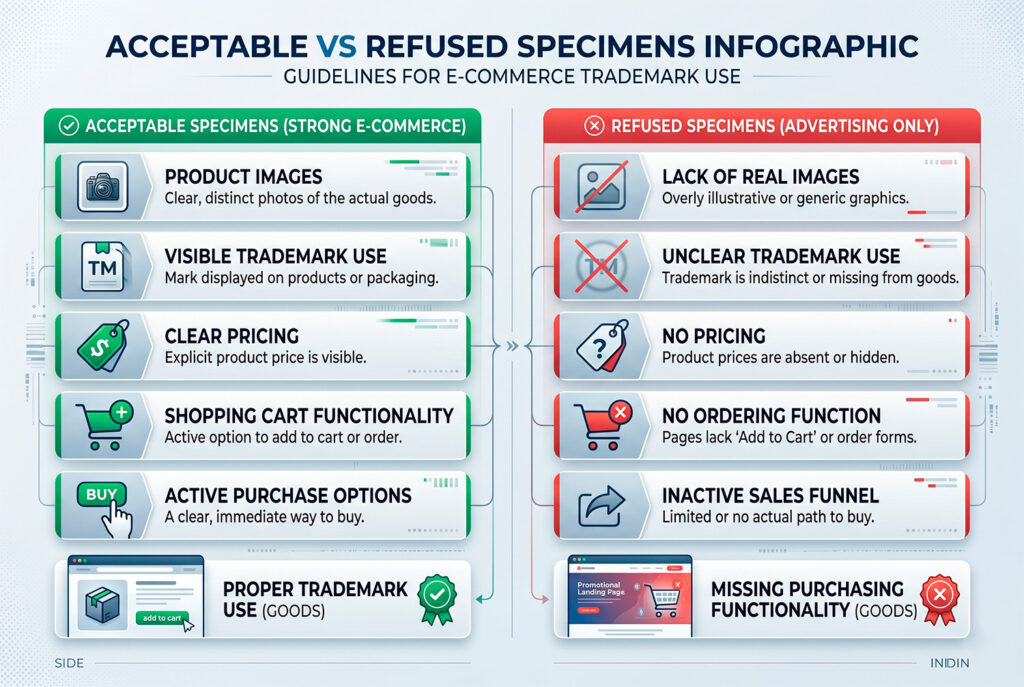
For online product listings, the USPTO generally expects a clear way for customers to buy or order the goods. A website page may be refused if it looks like advertising only.
A strong e-commerce specimen usually includes:
- product images,
- visible trademark use,
- pricing,
- shopping cart or ordering functionality,
- active purchase options.
The page should look like a real sales environment, not merely a promotional landing page.
Refusal #6: Improper Service Specimens
Service specimens create unique challenges because services are intangible. The specimen must show the mark used in advertising, rendering, or offering the services.
The USPTO may refuse service specimens that:
- only display a business name,
- fail to describe the services,
- show inactive or unfinished websites,
- lack contact, booking, or commercial context.
How to Avoid Service Specimen Refusals
Strong service specimens often include website service pages, booking functionality, inquiry forms, service descriptions, contact information, brochures, or advertising materials that clearly connect the mark with the services.
What Happens After a Specimen Refusal?
If the USPTO issues a specimen refusal, applicants may sometimes respond by submitting a substitute specimen, clarifying use, narrowing goods or services, or providing additional evidence. The right response depends on the filing basis, timing, and the nature of the refusal.
Responding without reviewing the underlying issue can create further delays. A substitute specimen must still satisfy USPTO requirements and must be supported by proper use in commerce at the relevant time.
How to Reduce Specimen Refusal Risk Before Filing
Many specimen problems begin before the application is submitted. Weak branding structure, inconsistent trademark placement, rushed packaging, and incomplete e-commerce setup can all create problems later.
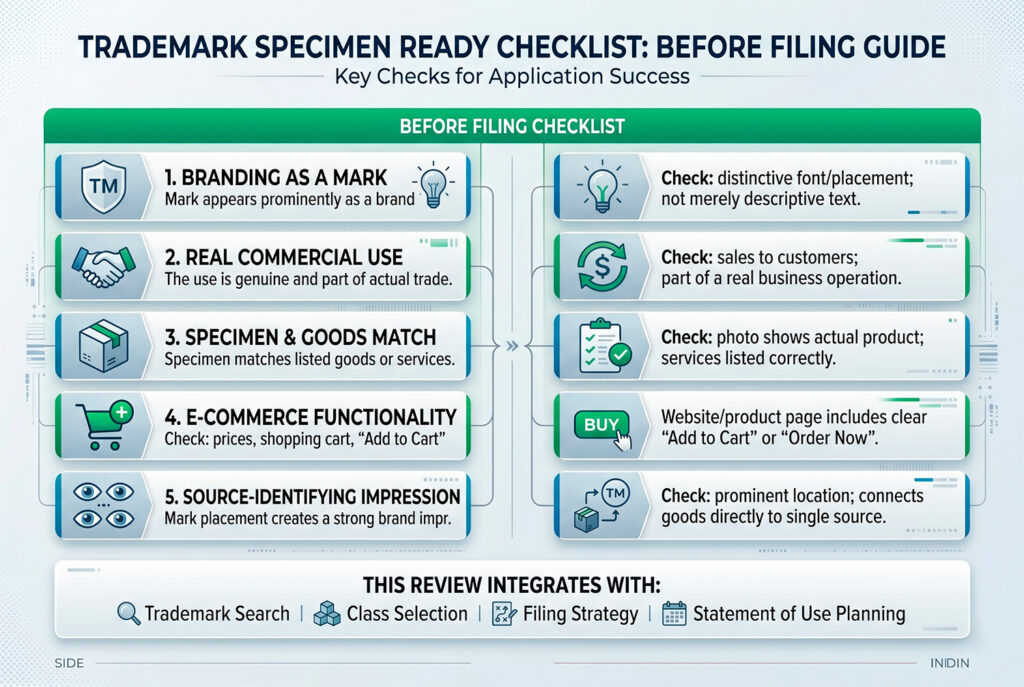
Businesses should consider specimen readiness before filing by reviewing:
- whether the mark appears as a brand,
- whether the use is real and commercial,
- whether the specimen matches the listed goods or services,
- whether the website or product page includes commercial functionality,
- whether the mark placement creates a source-identifying impression.
This review should work together with trademark search, class selection, filing strategy, and Statement of Use planning.
How Bonamark Can Help
Trademark specimen refusals can become expensive if problems are discovered late in the filing process. Bonamark can help businesses review trademark specimens, evaluate commercial use, assess branding presentation, and prepare filings with fewer avoidable risks.
Contact Bonamark to review trademark specimens before filing and reduce the risk of avoidable USPTO refusals. Our consultants can guide you through specimen preparation, application strategy, and filing requirements.
FAQ
What is a specimen refusal?
A specimen refusal happens when the USPTO determines that the submitted trademark specimen does not properly show trademark use in commerce.
What is ornamental trademark use?
Ornamental use happens when wording or designs appear decorative rather than functioning as a source identifier.
Can the USPTO reject digital mockups?
Yes. The USPTO frequently refuses digitally altered or computer-generated mockup specimens because they may not show actual commercial use.
Why are website screenshots sometimes refused?
Website screenshots for goods may be refused if they lack pricing, purchasing functionality, or a clear commercial context.
Can I submit substitute specimens after refusal?
In some situations, applicants may respond with substitute specimens that properly show trademark use in commerce.
How can businesses reduce specimen refusal risks?
Businesses can reduce risks through specimen planning, accurate goods and services descriptions, commercial-use review, and proper trademark strategy before filing.
- USPTO
- Trademark Filing
- Statement of Use
- Office Actions
- Trademark Specimens
Trademark services in the United States


