


















An intent-to-use (ITU) trademark application allows you to file a trademark before you start using it in commerce. This option is commonly used by startups, product launches, and businesses entering new markets.
An intent-to-use trademark application allows businesses to secure a trademark filing date before the mark is commercially used. However, additional filings such as a Statement of Use or extension requests may increase both the registration timeline and the total cost.
Intent-to-use trademark — key facts
- Filed before actual use in commerce
- No specimen required at the initial filing stage
- Requires a Statement of Use later
- Additional fees apply after approval
- Usually takes longer than a use-based application
What is an intent-to-use trademark application?
An intent-to-use application is based on a bona fide intention to use the mark in commerce in the future.
This means:
- you are not yet selling under the trademark
- but you have a genuine commercial plan to use it
This filing path allows businesses to secure priority rights before launch.
When should you file an intent-to-use application?
- before launching a product or service
- when building a brand in advance
- when entering a new market
- when protecting a name from competitors
Filing early can prevent another party from registering a similar mark first.
Why businesses choose intent-to-use applications
The main advantage of an intent-to-use application is the ability to secure an earlier filing date before launching a product or service.
- It establishes priority over later applicants
- It protects your brand during development and pre-launch stages
- It reduces the risk of competitors filing a similar trademark first
In competitive markets, filing early can be a critical advantage, especially when brand names are not yet publicly used.
Intent-to-use vs. use-based filing
| Filing type | When used | Specimen required | Total cost |
|---|---|---|---|
| Intent-to-use | Before use | No, not at filing | Higher over time |
| Use-based | After use begins | Yes | More predictable |
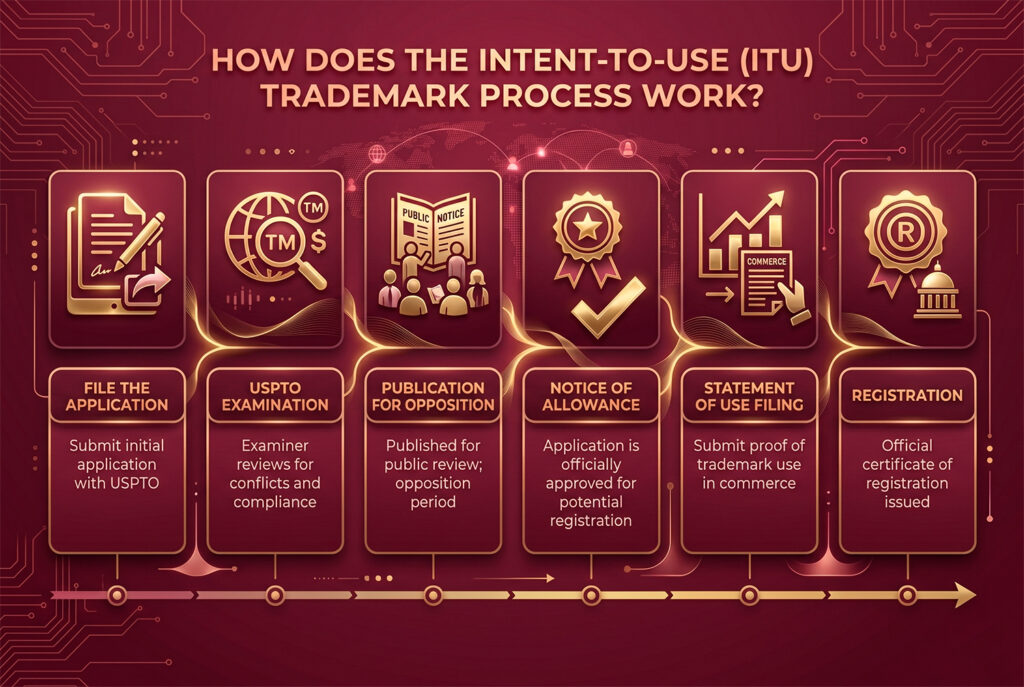
How does the intent-to-use process work?
- File the application
- USPTO examination
- Publication for opposition
- Notice of Allowance
- Statement of Use filing
- Registration
Three ways to claim use in an intent-to-use application
There are multiple ways to prove use in an ITU application, depending on when your trademark becomes active.
| Stage | Filing option | When used |
|---|---|---|
| Before publication approval | Amendment to Allege Use | When the mark is used early |
| After Notice of Allowance | Statement of Use | Within 6 months |
| After extension | Statement of Use (delayed) | During an extension period |
This flexibility allows applicants to align trademark registration with actual business timelines.
What is a Notice of Allowance?
A Notice of Allowance means your trademark has passed examination and publication, but it cannot be registered yet because it is not in use.
A Notice of Allowance is not a registration. It is a procedural milestone showing that the application may proceed if you later prove actual use in commerce.
What is a Statement of Use?
A Statement of Use confirms that your trademark is actively used in commerce.
- It includes a specimen of use
- It requires a declaration
- It costs $150 per class
What qualifies as use in commerce?
To complete an intent-to-use application, the trademark must be used in real commercial activity, not just prepared for use. The USPTO has specific requirements for what qualifies as use in commerce.
- For goods: the mark must appear on the product, packaging, or point-of-sale display, and the goods must be sold or transported in commerce
- For services: the mark must be used in advertising or providing services, and the services must actually be rendered
Token use or internal use is not sufficient. The use must be genuine and part of normal business operations.
What happens if you are not ready to use the trademark?
If your product or service is not ready, you can file an extension request.
- Each extension lasts 6 months
- Each extension costs $125 per class
- Multiple extensions may be required
You can file up to five extension requests, which allows up to 36 months from the Notice of Allowance to submit a Statement of Use.
This is one of the main reasons ITU applications become more expensive over time.
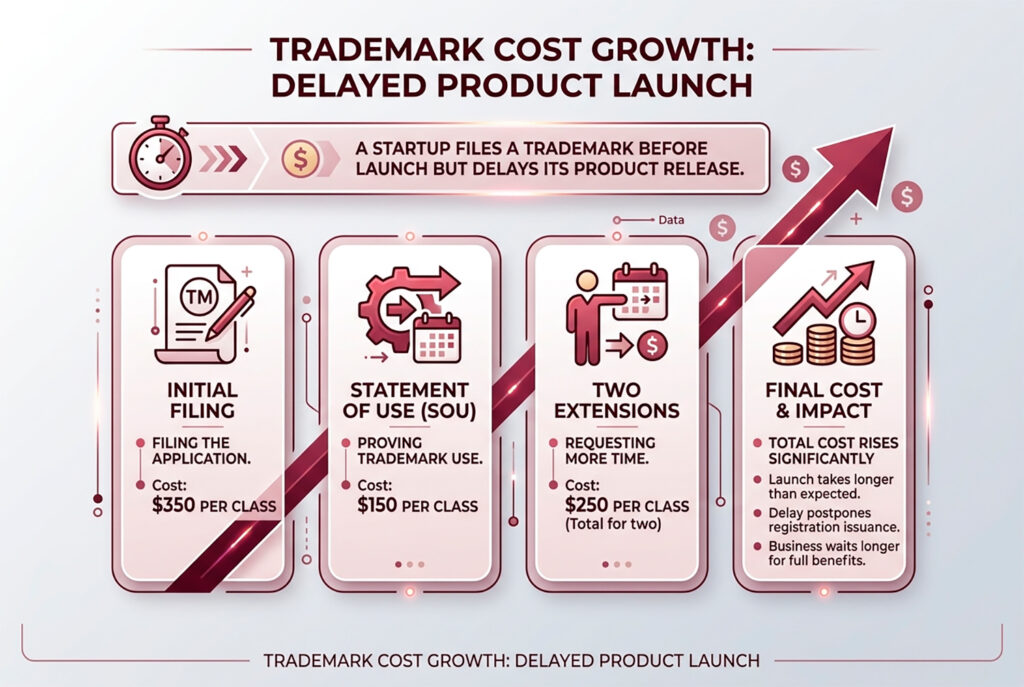
Real-world scenario: delayed product launch
A startup files a trademark before launch but delays its product release.
- Initial filing: $350 per class
- Statement of Use: $150 per class
- Two extensions: $250 per class
Total cost rises significantly because the launch takes longer than expected.
In practice, these delays also postpone the point at which registration can actually issue, which means the business waits longer for the full benefits of a registered mark.
How long does an intent-to-use trademark application take?
- Initial examination: often 6–8 months
- Publication period: 30 days
- Statement of Use deadline: 6 months after the Notice of Allowance
- Total timeline: often 12–24 months or longer
Delays in product launch can extend the timeline even further.
What are the risks of intent-to-use applications?
- higher total cost
- missed deadlines
- invalid specimen submission
- application abandonment
What happens if something goes wrong?
If issues arise during the intent-to-use process, the consequences can be significant.
- If the Statement of Use is rejected, the application may be delayed or refused
- If deadlines are missed, the application may be abandoned
- USPTO fees are not refunded after filing
- In some cases, applicants must refile a new application and pay fees again
If an application is abandoned, it may be possible to file a petition to revive within a limited period, but this adds cost and complexity.
When should you not use intent-to-use?
- if your trademark is already in use
- if you can provide a valid specimen immediately
- if you want a faster and simpler registration path
Conclusion
Intent-to-use applications are effective tools for early trademark protection, but they require careful planning, budgeting, and deadline management. Businesses that file early should also prepare for the extra steps that follow approval.
Contact Bonamark to ensure your trademark is filed correctly. Our consultants can guide you.
FAQ
Can you file a trademark before using it?
Yes. An intent-to-use application allows you to file before the trademark is used in commerce.
Is intent-to-use more expensive?
Yes. It usually costs more over time because it requires additional filings before registration.
How long do you have to file a Statement of Use?
You usually have 6 months after the Notice of Allowance to file a Statement of Use.
What happens if you miss the Statement of Use deadline?
Your application may be abandoned if you do not file a Statement of Use or an extension request on time.
Can you extend the Statement of Use deadline?
Yes. You can file an extension request if you are not yet ready to show use in commerce.
Do you need proof of use later?
Yes. A valid specimen of use is required when you file the Statement of Use.
Can intent-to-use applications be rejected?
Yes. They can be refused for the same reasons as other trademark applications, including conflicts, descriptiveness, or filing issues.
Should startups use intent-to-use?
Yes, in many cases. It is especially useful for startups that need early protection before launch.
Can you file an Amendment to Allege Use instead of a Statement of Use?
Yes, if the trademark is used before publication approval, you may file an Amendment to Allege Use instead of waiting for a Notice of Allowance.
How many extension requests can you file?
You can file up to five extension requests, each providing an additional 6 months.
What qualifies as use in commerce?
Use in commerce requires actual commercial activity, not preparation. Goods must be sold or transported, and services must be actively provided.
What happens if the Statement of Use is rejected?
The USPTO may issue an Office Action, and failure to resolve the issue may lead to refusal or abandonment.
Do you get a refund if the ITU application is abandoned?
No. USPTO filing fees are generally not refunded if the application is abandoned.
- Trademark registration
- USPTO
- Trademark Filing
- Intent-to-Use
- Statement of Use
Trademark services in the United States


