


















The likelihood of confusion is a trademark law standard used to decide whether consumers may mistakenly believe that two brands come from the same source or are commercially connected. It is one of the most common reasons the USPTO refuses trademark applications.
A likelihood-of-confusion refusal can happen even when two trademarks are not identical. The USPTO may refuse a mark if the wording, appearance, sound, meaning, or overall commercial impression is similar to an earlier mark and the goods or services are related.
For businesses, this issue is not just a technical trademark rule. It can affect launch timing, packaging, advertising, marketplace listings, investor diligence, and the cost of rebranding after a conflict appears.
What Does Likelihood of Confusion Mean?
Likelihood of confusion means that ordinary consumers may mistakenly assume that two brands are connected, affiliated, sponsored, or offered by the same company.
The USPTO explains likelihood of confusion as a core reason for refusing registration when marks are similar and the goods or services are related. The issue is not whether confusion has already occurred, but whether confusion is likely in the marketplace.
You can review the USPTO’s official explanation of likelihood of confusion for a direct overview of how this issue affects trademark applications.
Why Likelihood of Confusion Matters for Businesses
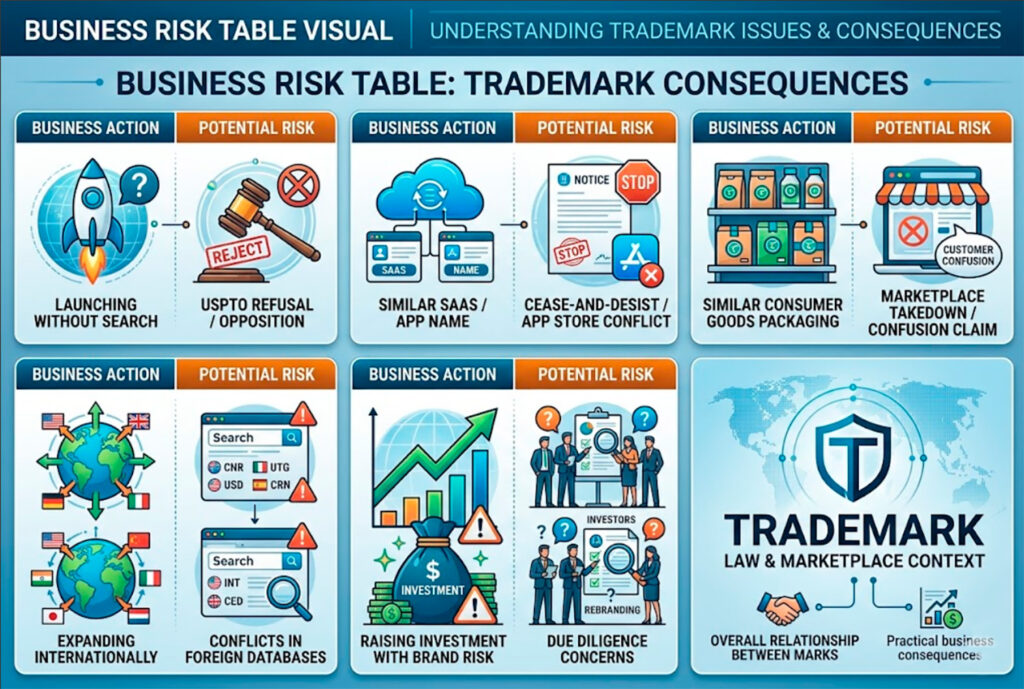
Likelihood-of-confusion risk can create practical business consequences before and after filing.
| Business Action | Potential Risk |
|---|---|
| Launching without a trademark search | USPTO refusal or opposition from an earlier brand. |
| Choosing a similar SaaS or app name | Cease-and-desist risk or app store conflict. |
| Using similar packaging in consumer goods | Marketplace takedown or customer confusion claim. |
| Expanding internationally without review | Conflicts in foreign trademark databases. |
| Raising investment with unresolved brand risk | Due diligence concerns and rebranding questions. |
For startups and growing brands, identifying confusion risk early is usually less expensive than changing a name after launch.
How the USPTO Evaluates Likelihood of Confusion
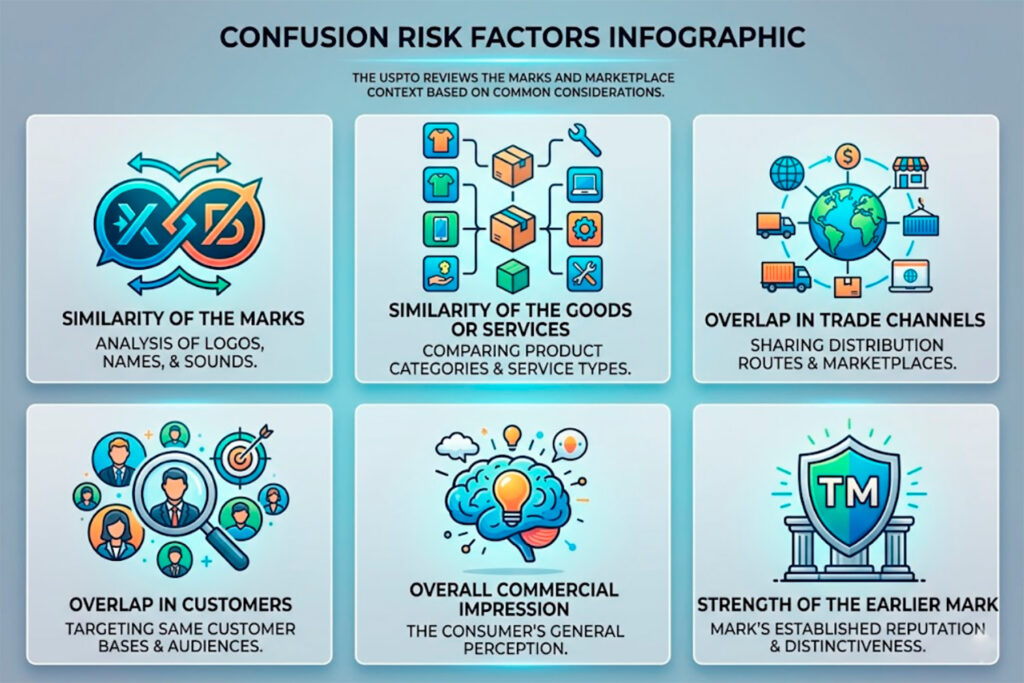
The USPTO does not rely on one single factor. Examining attorneys review the overall relationship between the marks and the marketplace context.
Common considerations include:
- similarity of the marks,
- similarity of the goods or services,
- overlap in customers,
- overlap in trade channels,
- overall commercial impression,
- strength of the earlier mark.
The analysis is practical. The question is whether consumers are likely to believe the brands are connected.
Similarity of the Marks
Two marks may be considered similar even if they are not identical. The USPTO may consider similarity in appearance, pronunciation, meaning, and commercial impression.
For example, risk may exist when marks:
- look visually similar,
- sound similar when spoken,
- have similar meanings,
- create a similar brand impression,
- share dominant wording or design elements.
Minor spelling changes do not always eliminate confusion risk.
Related Goods and Services
Trademark conflicts depend heavily on the goods and services involved. Two similar marks may coexist if the businesses operate in unrelated fields, while less similar marks may still conflict if the offerings are closely related.
Examples of relatedness may include:
- cosmetics and skincare products,
- software platforms and SaaS consulting,
- coffee products and cafe services,
- clothing and online retail stores selling clothing,
- fitness equipment and fitness training services.
Trademark class numbers are relevant, but they do not control the entire analysis. The real-world relationship between goods and services matters.
Trade Channels and Customers
The USPTO may also consider whether the goods or services reach the same customers through similar channels.
Overlap can occur through:
- online stores,
- Amazon or marketplace listings,
- retail shelves,
- app stores,
- industry events,
- digital advertising channels.
In modern commerce, even small businesses can reach national audiences quickly, which can increase the practical importance of clearance review.
Commercial Impression
Commercial impression refers to the overall idea or feeling a mark creates for consumers. Two marks may create a similar impression even if they use different words or designs.
For example, marks may be risky if they suggest the same concept, mood, or brand identity in a related market.
Common Examples of Likelihood-of-Confusion Risk
| Scenario | Why It May Create Risk |
|---|---|
| Similar names for related skincare products | Consumers may believe the products come from the same brand family. |
| Similar app names for related software tools | Users may assume affiliation or integration. |
| Similar restaurant and food product branding | The goods and services may be commercially connected. |
| Similar clothing names on marketplace listings | Online shoppers may confuse the source of products. |
How Likelihood of Confusion Affects Trademark Applications
If the USPTO finds a likelihood of confusion, it may issue an Office Action refusing registration under Section 2(d) of the Trademark Act. The applicant then has to respond, and the response may require legal argument, evidence, amendment, or strategic reconsideration.
A refusal can delay registration, increase costs, and create uncertainty around whether the brand can move forward safely.
How to Reduce Likelihood-of-Confusion Risk
Businesses can reduce confusion risk before filing by taking a structured approach to brand clearance.
Useful steps include:
- performing a professional trademark clearance search,
- reviewing similar spellings and sounds,
- analyzing related goods and services,
- checking common law use,
- reviewing marketplace and domain conflicts,
- adjusting branding strategy before launch if needed.
A proper trademark search can help identify risk before a business invests heavily in the mark.
Why Exact-Match Searching Is Not Enough
Many applicants search only for identical names. That approach misses a large part of trademark risk.
Likelihood-of-confusion analysis may involve:
- phonetic similarity,
- spelling variations,
- translations,
- abbreviations,
- similar meanings,
- related commercial impressions.
A brand may look available after a basic search but still face a refusal or legal challenge after deeper review.
How Bonamark Can Help
Likelihood-of-confusion analysis requires more than a database search. Bonamark can help businesses evaluate trademark availability, assess similar marks, review related goods and services, and prepare a filing strategy that reduces avoidable risk.
Contact Bonamark to review confusion risk before filing or launching your brand. Our consultants can guide you through trademark clearance, filing strategy, and next steps if a potential conflict appears.
FAQ
What is likelihood of confusion in trademark law?
Likelihood of confusion means consumers may mistakenly believe that two brands come from the same source or are commercially connected.
Can trademarks conflict if they are not identical?
Yes. The USPTO may refuse a mark if it is similar in sound, appearance, meaning, or commercial impression and the goods or services are related.
Does using a different trademark class avoid confusion?
Not always. Trademark classes matter, but the real-world relationship between the goods or services is more important.
What happens if the USPTO finds likelihood of confusion?
The USPTO may issue an Office Action refusing registration, which the applicant must address before the application can proceed.
How can businesses reduce confusion risk?
Businesses can reduce risk by performing a proper trademark clearance search before filing, launching, or investing heavily in a brand.
Is likelihood of confusion the same as trademark infringement?
They are related concepts, but not identical. USPTO likelihood-of-confusion review concerns registration, while infringement disputes usually involve marketplace use and enforcement.
- Trademark registration
- USPTO
- Trademark Search
- Trademark Clearance
- Likelihood of Confusion
Trademark services in the United States


