


















A trademark clearance search is a risk-analysis process used to identify existing trademarks, common law use, similar branding, and marketplace conflicts before a business files or launches a new brand. A proper search looks beyond exact matches and evaluates whether consumers may confuse the proposed mark with an earlier brand.
Many businesses spend thousands of dollars on naming, packaging, domains, websites, product photography, and advertising before discovering that their brand may already conflict with an earlier mark. A proper clearance search helps reduce that risk before the business makes expensive public commitments.
In 2026, clearance work is no longer limited to checking whether an exact name appears in the USPTO database. Brands now launch through e-commerce stores, social media, app stores, marketplaces, SaaS platforms, influencer campaigns, and international channels from the earliest stages of growth.
What Is a Trademark Clearance Search?
A trademark clearance search is a structured review used to identify existing trademarks or similar marks that may create registration or legal risk. The goal is not simply to find identical names.
A proper search evaluates:
- similar wording,
- similar pronunciation,
- similar meaning,
- similar commercial impression,
- related goods and services,
- overlapping industries,
- common law use,
- digital marketplace conflicts.
The USPTO may refuse an application based on likelihood of confusion even when two marks are not identical.
Why Trademark Clearance Searches Matter in 2026
Modern businesses create public brand footprints faster than ever. A founder can launch a Shopify store, reserve social handles, open Amazon listings, run paid ads, and reach international customers before completing a formal legal review.
That speed creates risk. A weak or incomplete search may lead to:
- USPTO refusals,
- oppositions,
- cease-and-desist letters,
- forced rebranding,
- marketplace takedowns,
- domain and social handle conflicts,
- investor due diligence concerns.
Discovering a conflict after launch is usually more expensive than identifying risk before filing.
Trademark Search vs Trademark Clearance
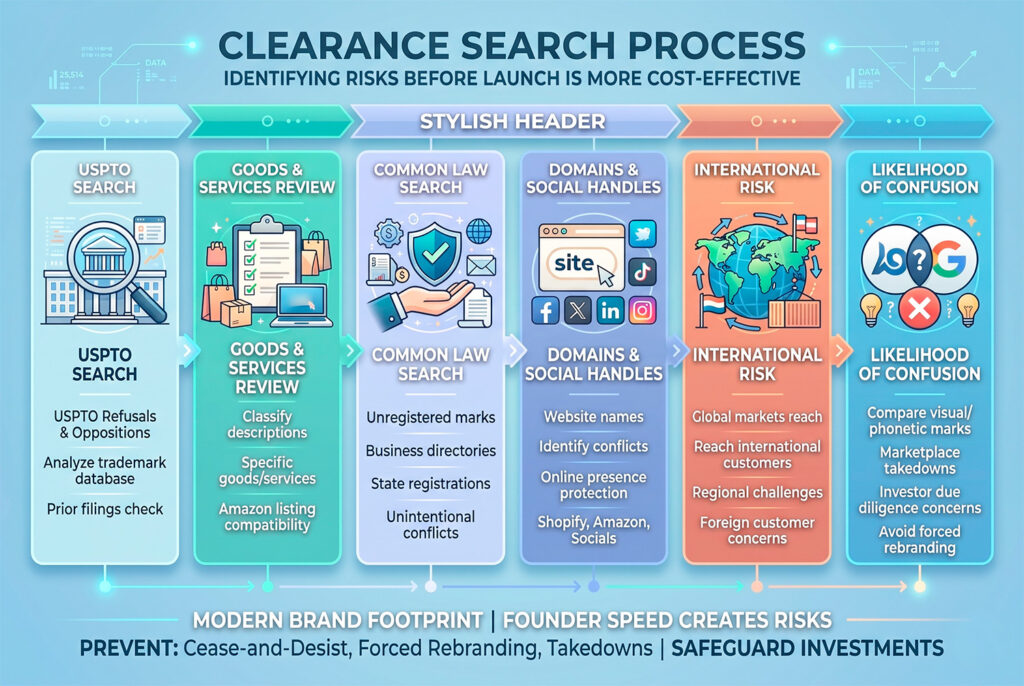
Basic trademark search and full clearance analysis are not the same thing.
| Basic Trademark Search | Trademark Clearance Analysis |
|---|---|
| Looks for exact or near-exact matches. | Evaluates legal and commercial risk. |
| Often database-focused. | Includes databases, common law use, marketplaces, and digital channels. |
| May rely on automated results. | Reviews similarity, goods/services, and marketplace context. |
| Useful as a starting point. | Better for filing strategy and launch decisions. |
A professional trademark search should help businesses understand risk, not just collect database results.
Step 1: Search the USPTO Database
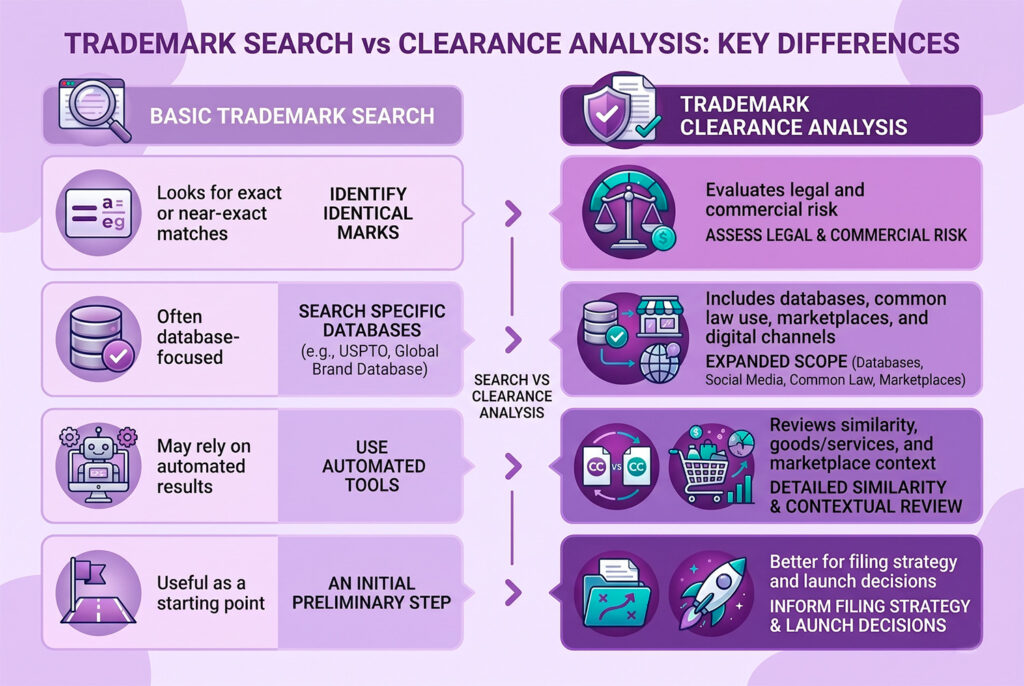
The USPTO database is usually the starting point for US trademark clearance. Businesses should review exact matches, similar spellings, phonetic variations, plurals, abbreviations, and marks with a similar commercial impression.
The USPTO’s trademark search tools can help locate federal applications and registrations, but search results still need interpretation. A name that appears “available” at first glance may still create conflict risk when related goods, similar wording, or overlapping markets are considered.
Step 2: Analyze Related Goods and Services
Trademark conflicts are evaluated in context. Two similar marks may coexist in unrelated industries, while less similar marks may still conflict if the goods or services are commercially related.
Businesses should analyze:
- trademark classes,
- actual marketplace use,
- industry overlap,
- distribution channels,
- customer perception.
This step is especially important for software, apparel, e-commerce, consumer goods, health products, digital services, and agency brands.
Step 3: Review Common Law Use
Trademark rights can arise through commercial use even without federal registration. A proper clearance search therefore often includes common law review.
Common law sources may include:
- Google search results,
- business directories,
- marketplace listings,
- social media profiles,
- app stores,
- industry databases,
- company websites.
Common law conflicts may still create legal risk even when no federal registration exists.
Step 4: Check Domains, Social Handles, and Marketplaces
Trademark strategy now overlaps with digital brand availability. Businesses should review domain names, social media handles, marketplace seller names, app store listings, and online brand consistency.
This does not replace trademark analysis, but it helps evaluate practical brand usability. A brand that is legally promising but impossible to use online may still create commercial problems.
Step 5: Evaluate International Risk
Many businesses expand internationally earlier than expected. Trademark conflicts may arise outside the United States if a brand enters foreign markets, sells cross-border, or uses international marketplaces.
International review may include:
- WIPO databases,
- EUIPO records,
- country-level trademark databases,
- Madrid Protocol filings.
Businesses planning cross-border expansion should consider international strategy before major brand investments.
Step 6: Analyze Likelihood of Confusion
One of the most misunderstood parts of trademark clearance is likelihood of confusion. The USPTO does not require trademarks to be identical before refusing an application.
Risk analysis may consider:
- visual similarity,
- pronunciation,
- meaning,
- overall commercial impression,
- related industries,
- customer overlap.
This is why proper clearance involves judgment, not just database searching.
When You Should Perform a Professional Clearance Search
A professional clearance search is especially important when a business is about to make visible or expensive brand commitments.
You should consider a professional review before:
- filing a trademark application,
- launching nationally,
- ordering product packaging,
- building a major website,
- opening marketplace listings,
- running paid advertising,
- raising investment,
- expanding internationally.
Early review is usually less expensive than rebranding after a conflict appears.
Common Trademark Search Mistakes
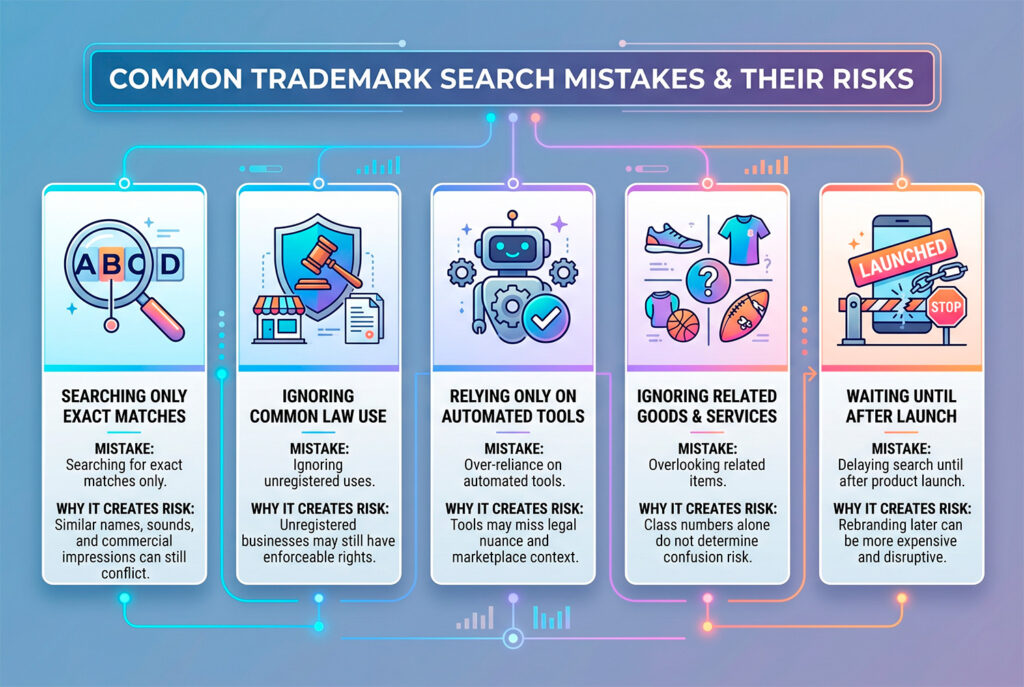
| Mistake | Why It Creates Risk |
|---|---|
| Searching only exact matches | Similar names, sounds, and commercial impressions can still conflict. |
| Ignoring common law use | Unregistered businesses may still have enforceable rights. |
| Relying only on automated tools | Tools may miss legal nuance and marketplace context. |
| Ignoring related goods and services | Class numbers alone do not determine confusion risk. |
| Waiting until after launch | Rebranding later can be more expensive and disruptive. |
Why Trademark Search Is Not a Guarantee
Even comprehensive searches cannot guarantee registration or eliminate every legal risk. Trademark law involves interpretation, evolving marketplace conditions, and future third-party actions.
However, a proper clearance process can significantly reduce avoidable risk and improve filing strategy.
How Bonamark Can Help
Trademark clearance involves more than entering a name into a database. Bonamark can help businesses review trademark availability, evaluate likelihood-of-confusion risks, analyze classes, assess common law exposure, and prepare filing strategy.
Contact Bonamark to perform a professional trademark clearance search before filing or launching your brand. Our consultants can guide you through search results, risk analysis, and trademark filing strategy.
FAQ
What is a trademark clearance search?
A trademark clearance search is a review process used to identify existing trademarks or similar marks that may create registration or legal risks.
Does a USPTO search guarantee trademark approval?
No. Even if a mark appears available, the USPTO may still refuse the application based on likelihood of confusion or other legal issues.
Should businesses search only exact trademark matches?
No. Proper trademark searches should also evaluate similar wording, pronunciation, spelling, meaning, and commercial impression.
What is common law trademark risk?
Common law risk refers to trademark rights created through commercial use even without federal registration.
Why are trademark searches important before launch?
Early trademark searches may help businesses avoid refusals, rebranding costs, marketplace disputes, and legal conflicts.
Can automated trademark search tools replace legal review?
Automated tools may help identify basic results, but they often cannot fully evaluate likelihood-of-confusion risks or broader commercial context.
- Trademark registration
- USPTO
- Trademark Search
- Trademark Clearance
- Likelihood of Confusion
Trademark services in the United States


