













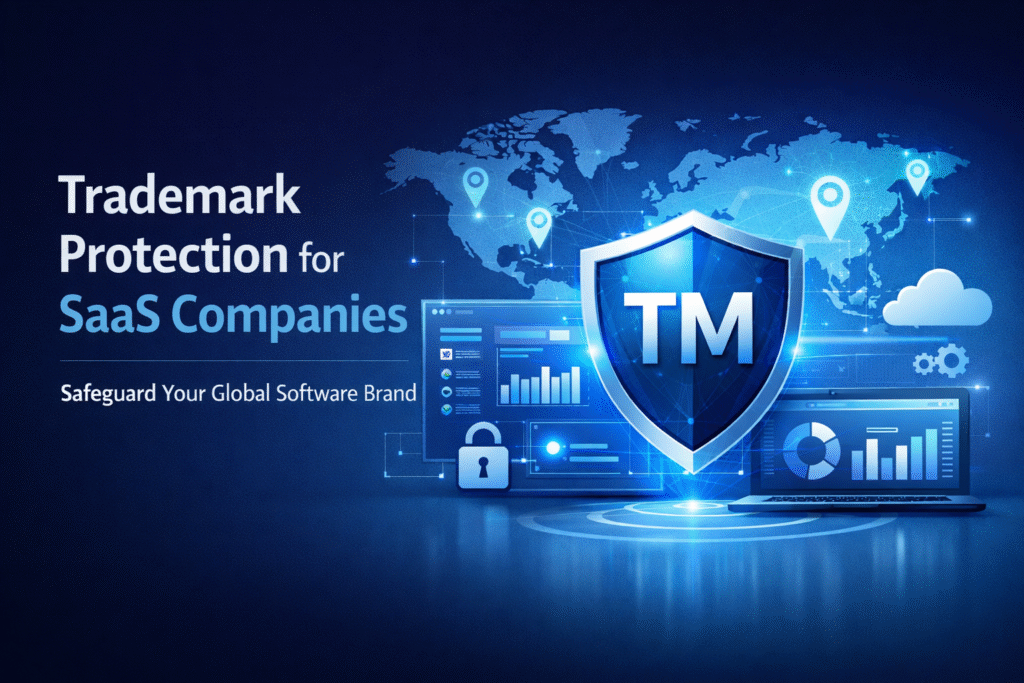
In the SaaS world, code may be king — but brand is the kingdom.
Software-as-a-Service companies are built on intangibles: recurring revenue, user trust, and digital visibility. You don’t ship physical products. You don’t rely on storefronts. What customers remember, search for, recommend, and renew is your name.
That name — your SaaS brand — can become one of the most valuable assets in your company. It can also become one of the most vulnerable if it’s not properly protected.
For founders and growth-stage SaaS leaders, trademark protection isn’t just a legal checkbox. It’s a growth strategy, risk shield, and valuation driver rolled into one.
The Hidden Business Risk in SaaS: Brand Exposure at Scale
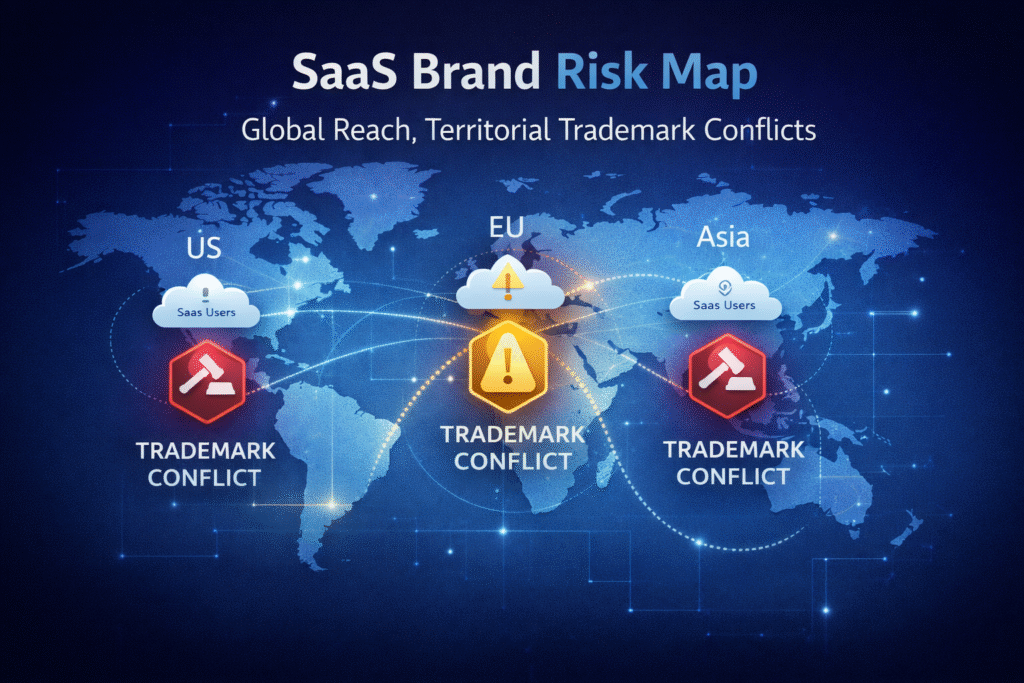
SaaS companies scale differently than traditional businesses. A startup in Warsaw, London, or Austin can acquire users in 30 countries within months. That speed is a strength — but it also creates legal exposure most founders don’t see coming.
Here’s a common scenario:
A SaaS startup launches with a strong, catchy brand. Customers sign up quickly. Investors show interest. Then, during due diligence or international expansion, the company discovers:
- A similar software product already has a registered trademark in the EU
- Another company owns the same name in a key Asian market
- A competitor has filed a confusingly similar mark for related software services
Suddenly, what felt like a marketing asset becomes a legal liability. Rebranding at this stage doesn’t just cost money — it costs momentum, recognition, SEO equity, and customer trust.
This is why trademark protection for SaaS companies must happen early, not after scale.
Why SaaS Brands Are Especially Vulnerable
Unlike traditional industries, SaaS businesses operate in an environment where:
1️⃣ Everything Happens Online
Customers find you through search engines, app marketplaces, and product directories. If another platform uses a similar name, confusion happens instantly — and digitally.
2️⃣ Borders Are Blurred
You may be incorporated in one country but have users, servers, and revenue streams worldwide. Trademark rights, however, remain territorial. Protection in one country doesn’t automatically extend to another.
3️⃣ The Product Is the Brand
In SaaS, users don’t interact with packaging or physical experience — they interact with your interface under your name every day. That constant brand exposure amplifies both value and risk.
Without proper SaaS trademark registration, your company can unintentionally build equity in a brand you don’t fully control.
What Can Actually Go Wrong Without SaaS Trademark Protection?
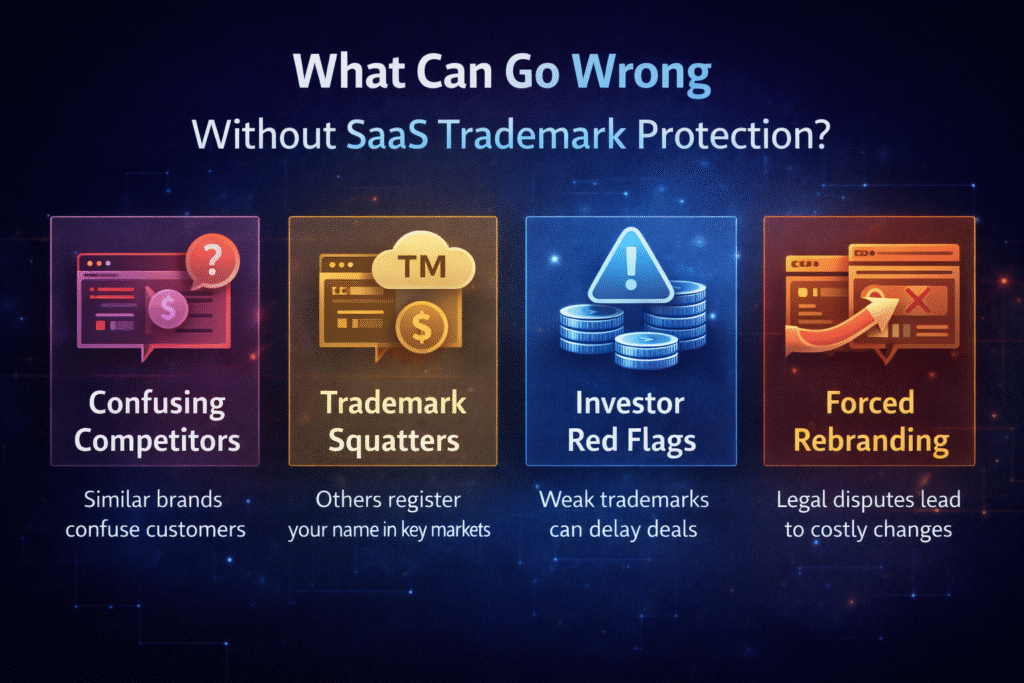
This isn’t theoretical. SaaS companies regularly face:
🔹 Competitors with Confusingly Similar Names
A rival platform launches with a nearly identical brand. Customers mix up reviews, search results, and social mentions. Your marketing dollars help their growth.
🔹 Trademark Squatters in Key Markets
Someone registers your SaaS name in a country you haven’t entered yet — then demands payment when you expand.
🔹 Investor Red Flags
During funding or acquisition, weak or missing trademark protection becomes a due diligence issue, reducing valuation or delaying deals.
🔹 Forced Rebranding
If another party has prior rights, you may be legally required to change your name — after you’ve already built product recognition.For SaaS founders, this can mean lost revenue, legal costs, and stalled growth at the worst possible time.
How to Protect a SaaS Brand the Right Way
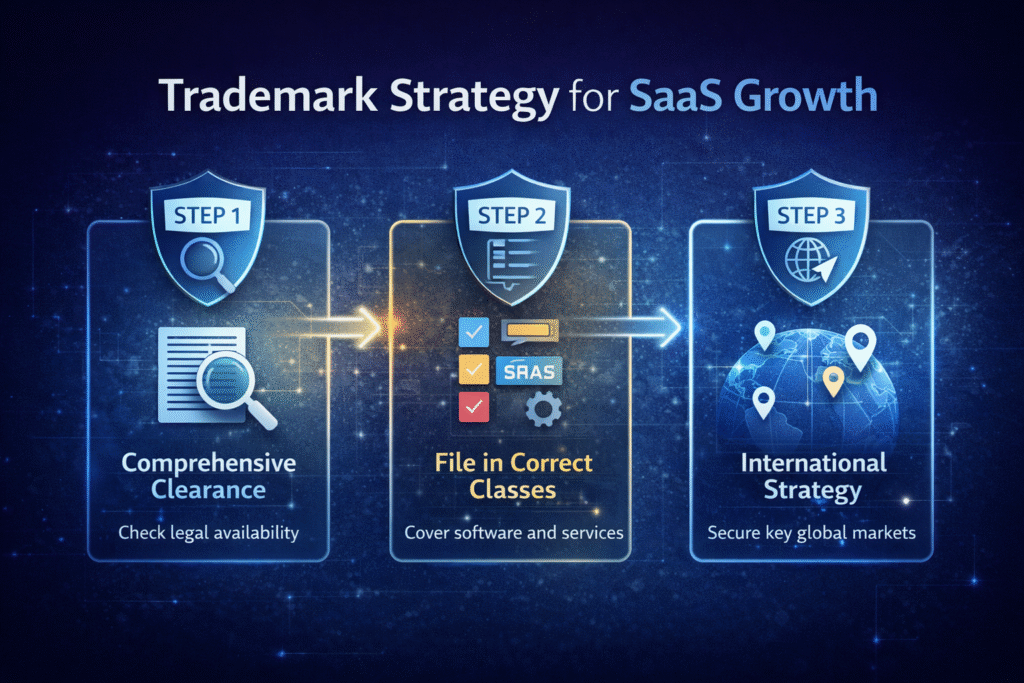
Effective software brand protection starts with understanding that SaaS is legally different from selling software in a box.
Step 1: Comprehensive Trademark Clearance
Before scaling, a professional search should assess whether your SaaS brand is:
- Legally available
- Distinctive enough to register
- Free from major conflicts in key markets
This goes far beyond a quick Google search. It involves analyzing trademark databases, similar names, and industry overlaps.
Step 2: Filing in the Right Trademark Classes
Many SaaS companies make a critical mistake: they file only under “software,” but forget the services side.
SaaS brands often require protection covering:
- Downloadable software
- Software as a Service (SaaS)
- Platform as a Service (PaaS)
- API and integration services
- Technical support and cloud services
Incorrect class coverage can leave gaps competitors exploit.
Step 3: Building an International Strategy
If your SaaS product is accessible globally, your trademark strategy should reflect that reality. Early international filings can prevent others from claiming your brand in major markets like the EU, UK, U.S., and Asia.
Bonamark works with SaaS companies to align trademark strategy with growth plans, fundraising timelines, and market expansion — not just legal formalities.
Trademarks and SaaS Valuation: What Investors Notice
Investors don’t just look at revenue and churn. They assess defensibility.
A well-protected SaaS brand signals:
✔ Long-term market positioning
✔ Lower legal risk
✔ Stronger competitive moat
✔ Readiness for global scale
On the other hand, missing or weak trademark rights can appear as unresolved legal exposure — something investors prefer to avoid.
In many cases, solid IP protection strengthens negotiating power during funding and exit discussions.
Protection Doesn’t Stop at Registration
Registering a trademark is a milestone, not the finish line. SaaS brand protection also involves:
- Monitoring for similar trademark filings
- Taking action against copycat platforms
- Addressing domain name conflicts
- Keeping registrations renewed and up to date
As your product evolves — new features, modules, sub-brands — your IP strategy should evolve too.
The Bottom Line for SaaS Founders
Your SaaS brand isn’t just a marketing choice. It’s a core business asset tied to growth, trust, and company value.
Strong trademark protection for SaaS companies:
- Prevents costly legal surprises
- Supports international expansion
- Strengthens investor confidence
- Protects the reputation you’re building every day
In a market where software can be replicated but brand trust cannot, securing your name is one of the smartest early moves a SaaS company can make.
FAQ: Trademark Protection for SaaS Companies
Why is trademark protection especially important for SaaS companies?
SaaS growth happens online and often across borders from day one. Your brand name is what users search, remember, and recommend — and it can be vulnerable to conflicts, copycats, or squatters if you don’t secure trademark rights early.
What can go wrong if a SaaS brand isn’t trademarked?
Common risks include competitors using confusingly similar names, trademark squatters registering your brand in key markets, investor due diligence issues, and even forced rebranding after you’ve built recognition, SEO equity, and customer trust.
Is a quick Google search enough before launching a SaaS brand?
No. A proper trademark clearance search checks trademark databases, similar marks, and industry overlaps. It helps confirm your brand is legally available and distinctive enough to register.
Which trademark classes typically matter for SaaS brands?
SaaS companies often need protection that covers both software and services — for example, downloadable software and SaaS/PaaS-related services, plus related offerings like API/integration services, technical support, or cloud services.
If my company is registered in one country, am I protected worldwide?
No. Trademark rights are territorial. A registration in one country doesn’t automatically protect your brand in other markets, even if you have users there.
When should a SaaS company think about international trademark filings?
Ideally early — especially if you expect global user acquisition or expansion into major markets (such as the EU, UK, U.S., and parts of Asia). Early filings can reduce the risk of others claiming your brand first.
How does trademark protection affect SaaS valuation and fundraising?
Investors assess defensibility and legal risk. A well-protected brand signals readiness for scale, lowers legal exposure, and can improve negotiating power in funding or acquisition discussions.
Is registration the final step in protecting a SaaS brand?
Not really. Ongoing protection often includes monitoring for similar filings, addressing copycats, resolving domain conflicts, and keeping registrations renewed and updated as your product and brand evolve.
- SaaS Trademark Protection
Trademark services in the United States