













Canada Trademark Search
Start Your Canada Trademark Search
Basic Availability Report & Our Offer to your email in 24 hours.

Expanding your business?
Request a Free International Trademark Search in over 180 countries
Protect your brand worldwide with Bonamark.
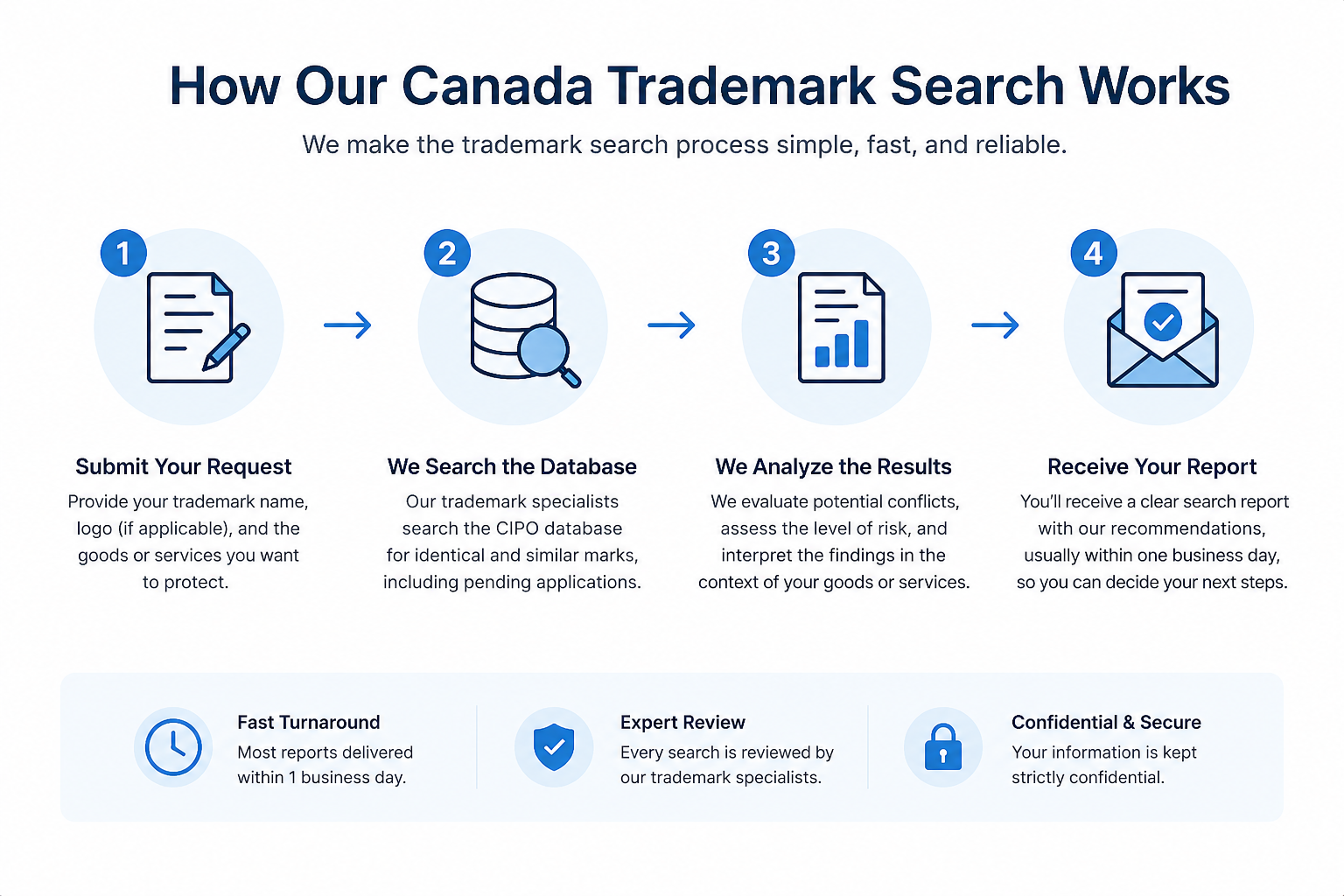
A Canada trademark search helps you check whether a proposed brand name, logo, slogan, or other trademark may conflict with existing trademarks before you file an application with the Canadian Intellectual Property Office (CIPO).
Bonamark offers Canada trademark search and preliminary clearance support for businesses, startups, Amazon sellers, ecommerce brands, and international applicants that want to reduce filing risks before starting the registration process.
A search does not guarantee registration, but it can help identify identical or similar marks, potential conflicts, and issues that may lead to an objection, refusal, opposition, or costly delay later in the process.
Why a Canada Trademark Search Matters Before Filing
A Canada trademark search is an important first step before filing because CIPO examines applications for conflicts with earlier trademarks. If a similar trademark already exists for related goods or services, your application may face objections or additional legal work.
Many applicants focus only on whether their exact brand name is already registered. In practice, trademark conflicts can also arise from similar spelling, pronunciation, meaning, translation, logo elements, or related goods and services.
For example, a proposed trademark may appear available at first glance, but a similar existing mark in the same or a related class can still create a risk. That is why a professional trademark search is more than a simple name lookup.
A trademark search can help you:
- Check whether an identical trademark already exists in Canada.
- Find similar trademarks that may create a likelihood of confusion.
- Review related goods and services in relevant trademark classes.
- Identify filing risks before paying government and service fees.
- Decide whether to proceed, adjust the mark, or consider another brand name.
What a Canada Trademark Search Includes
A Canada trademark search should review much more than an exact keyword match. A professional search examines the proposed trademark from several perspectives, including identical trademarks, similar marks, related goods and services, pending applications, and inactive records.
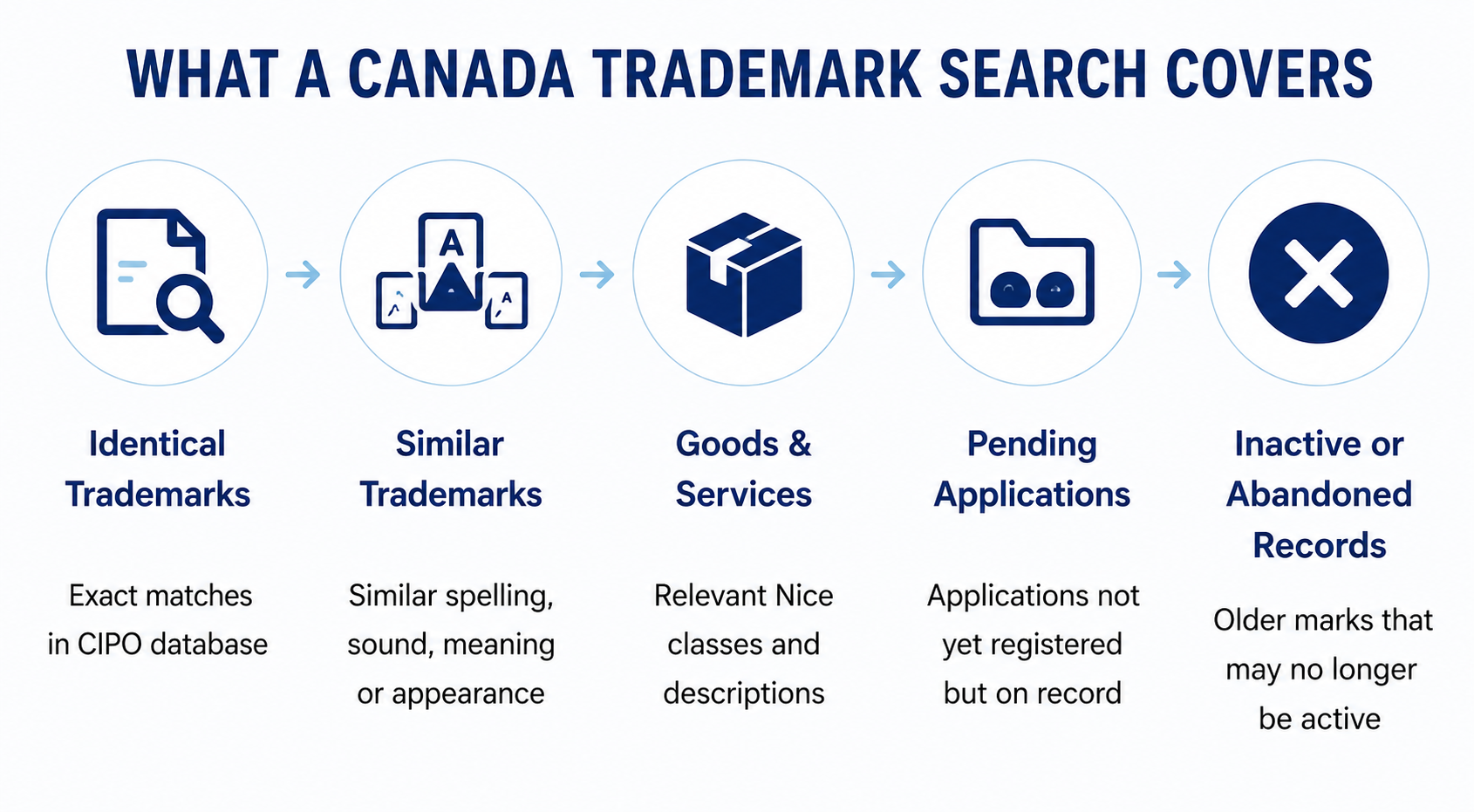
The infographic above summarizes the key areas examined during a professional Canada trademark search. The table below explains what each search area includes and why it matters before filing your trademark application.
| Search Area | What It Checks | Why It Matters |
| Identical trademarks | Exact matches for the same word, phrase, or brand name. | An identical mark can create a clear filing risk. |
| Similar trademarks | Marks with similar spelling, pronunciation, appearance, or meaning. | Similar marks may still create confusion, even if they are not identical. |
| Goods and services | Relevant Nice classes and descriptions of products or services. | Conflicts are assessed in context, not only by the wording of the mark. |
| Pending applications | Applications that have not yet registered but are already part of the public record. | Pending applications can still affect your filing strategy. |
| Inactive or abandoned records | Older marks that may no longer be active. | These records can help understand past use and naming risks. |
CIPO Trademark Search and Its Limitations
The official Canadian Trademarks Database is provided by the Canadian Intellectual Property Office. It allows users to search trademark records in Canada, including active and inactive trademarks, official marks, and other records listed in the database.
You can access the official Canadian Trademarks Database directly through CIPO. CIPO also notes in its Trademarks Guide that searching existing trademarks is a useful first step before filing, because similar trademarks may create legal and filing risks.
However, a basic database search has limitations. It may show matching records, but it does not automatically tell you whether your trademark is likely to be accepted, whether goods and services are too close, or whether a similar mark could create confusion.
Common limitations of a basic CIPO search:
- It may miss similar marks if only one spelling or keyword is checked.
- It does not replace legal analysis of confusing similarity.
- It may not explain whether goods or services are related.
- It may not identify risks from translations, variations, or phonetic similarity.
- It does not guarantee that CIPO will approve the application.
For this reason, a professional Canada trademark search is usually recommended before filing, especially when the mark is commercially important or the applicant plans to invest in branding, packaging, advertising, ecommerce listings, or international expansion.
Basic Trademark Search vs Trademark Clearance Search
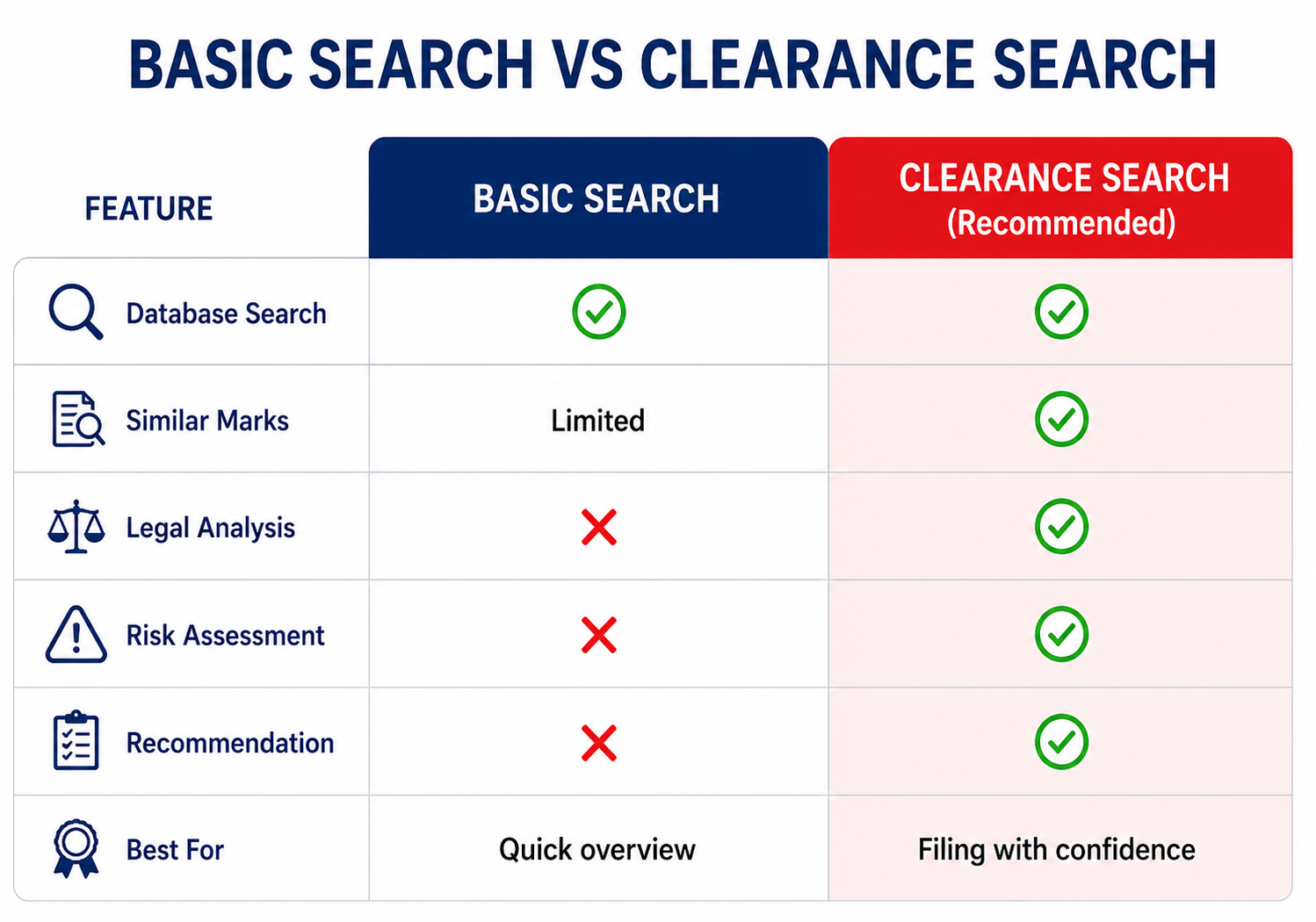
A basic trademark search and a trademark clearance search serve different purposes. A basic search usually checks whether the exact trademark appears in a database. A clearance search goes further and looks for practical filing and conflict risks.
| Type of Search | Best For | Limitations |
| Basic trademark search | Early-stage name screening and quick availability checks. | May not identify similar marks or legal conflict risks. |
| Professional clearance search | Applicants preparing to file a trademark application. | More detailed, but still cannot guarantee approval. |
| Trademark Study | Applicants who need a more detailed review before filing. | Requires professional review and may take longer than a quick search. |
Bonamark can help with an initial trademark search and, when needed, a more detailed Trademark Study before filing. This helps applicants make a more informed decision before proceeding with trademark registration in Canada.
How Bonamark Conducts a Canada Trademark Search
Bonamark reviews the proposed trademark with the filing goal in mind. The purpose is not only to find database results, but also to understand whether the mark appears suitable for the next stage of the registration process.
- We review the proposed mark. This may include a brand name, logo, slogan, or combined mark.
- We check relevant trademark records. The search looks for identical and similar marks that may affect filing.
- We review goods and services. We consider the products or services connected with the mark and the relevant trademark classes.
- We identify visible risks. These may include similar marks, crowded classes, descriptive wording, or weak trademark elements.
- We explain the next step. Depending on the results, the applicant may proceed, request a deeper study, adjust the mark, or choose another name.
This process is especially useful for applicants outside Canada who want to understand potential risks before filing through CIPO.
When You Should Request a Trademark Search
You should request a Canada trademark search before filing an application, launching a new brand, ordering packaging, creating marketplace listings, or investing in marketing materials.
A search is also useful when you are expanding from another country into Canada. Trademark rights are territorial, so a trademark registered in the United States, the European Union, or another jurisdiction is not automatically protected in Canada.
A Canada trademark search is especially useful if:
- You are launching a new brand in Canada.
- You want to register a business name as a trademark.
- You already use a brand in another country and plan to enter Canada.
- You sell products on Amazon, Shopify, Etsy, or another ecommerce platform.
- You want to reduce the risk of objections before filing.
- You are choosing between several possible brand names.
What Happens After the Trademark Search
If the search results are favorable, the next step is usually to prepare and file a trademark application in Canada. This includes choosing the correct applicant, identifying the mark type, preparing the goods and services description, selecting the relevant classes, and submitting the application to CIPO.
If the search identifies a risk, the applicant may still have several options. Depending on the results, it may be possible to adjust the filing strategy, narrow the goods and services, choose a different mark, or request a more detailed Trademark Study before making a final decision.
When you are ready to proceed, Bonamark can also help with trademark registration in Canada, including application preparation, filing support, and communication throughout the registration process.
Canada Trademark Search for Different Types of Marks
Different types of trademarks may require different search approaches. A word mark is usually searched by wording, spelling, pronunciation, and possible variations. A logo or combined mark may require review of both word elements and visual elements.
| Trademark Type | Search Focus |
| Word mark | Exact wording, similar wording, spelling variations, phonetic similarity, translations, and related meanings. |
| Logo | Visual elements, design similarity, wording inside the logo, and related goods or services. |
| Combined mark | Both the word element and the design element of the mark. |
| Slogan | Similar phrases, descriptive wording, and related brand messaging. |
Start with a Canada trademark search to reduce filing risks before you apply.
Canada Trademark Search FAQ
Is a trademark search mandatory in Canada?
No. A trademark search is not mandatory before filing in Canada. However, it is strongly recommended because it can help identify similar trademarks and potential conflicts before the application is submitted.
Can I search the CIPO database myself?
Yes. You can use the official Canadian Trademarks Database yourself. However, a basic search may not identify all legal risks, especially similar marks, related goods or services, translations, or marks with different spellings.
Does a Canada trademark search guarantee registration?
No. A trademark search cannot guarantee that CIPO will approve an application. It helps reduce risk by identifying visible conflicts and potential problems before filing.
What is the difference between a trademark search and trademark registration?
A trademark search checks whether a proposed mark may conflict with existing trademarks. Trademark registration is the formal process of filing an application with CIPO to obtain registered trademark protection in Canada.
What should I do if a similar trademark is found?
If a similar trademark is found, you may need a more detailed review. Depending on the risk, you may still proceed, narrow your goods and services, adjust the mark, or choose a different brand name.
Request a Canada Trademark Search
Before filing a trademark application in Canada, Bonamark can help you check the proposed mark, identify potential conflicts, and decide whether it is reasonable to move forward with registration.