














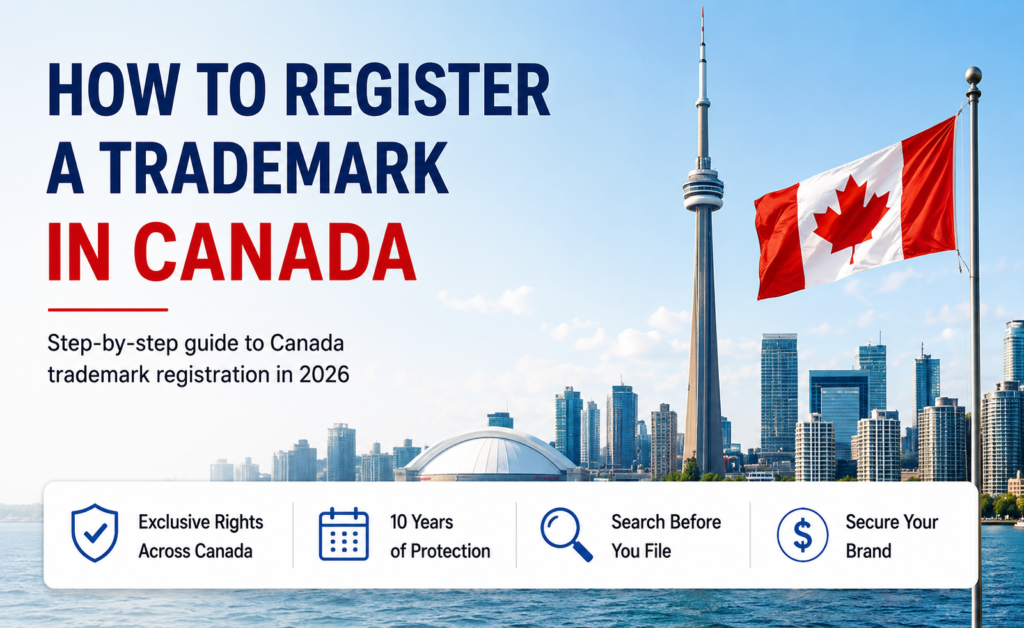
Registering a trademark in Canada gives a business the exclusive right to use that trademark across Canada for the goods or services listed in the registration. The process is handled by the Canadian Intellectual Property Office (CIPO), and it usually involves a trademark search, application preparation, filing, examination, publication, and registration.
This guide explains how to register a trademark in Canada, how much it costs, how long the process can take, and what to check before filing. If you already want professional filing support, Bonamark offers trademark registration in Canada. If you want to check availability first, you can start with a Canada trademark search.
Quick Summary
- Authority: Canadian Intellectual Property Office (CIPO).
- Official online filing fee: CAD $491.06 for the first class and CAD $149.04 for each additional class in 2026.
- Typical process: search, prepare, file, examination, publication, registration.
- Protection: a registered trademark gives exclusive rights across Canada.
- Term: a Canadian trademark registration lasts 10 years and can be renewed.
- Search: not mandatory, but strongly recommended before filing.
What Is a Trademark in Canada?
A trademark in Canada is a sign that distinguishes one business’s goods or services from those of another business. It may be a word, name, logo, slogan, design, sound, or another distinctive sign used in connection with products or services.
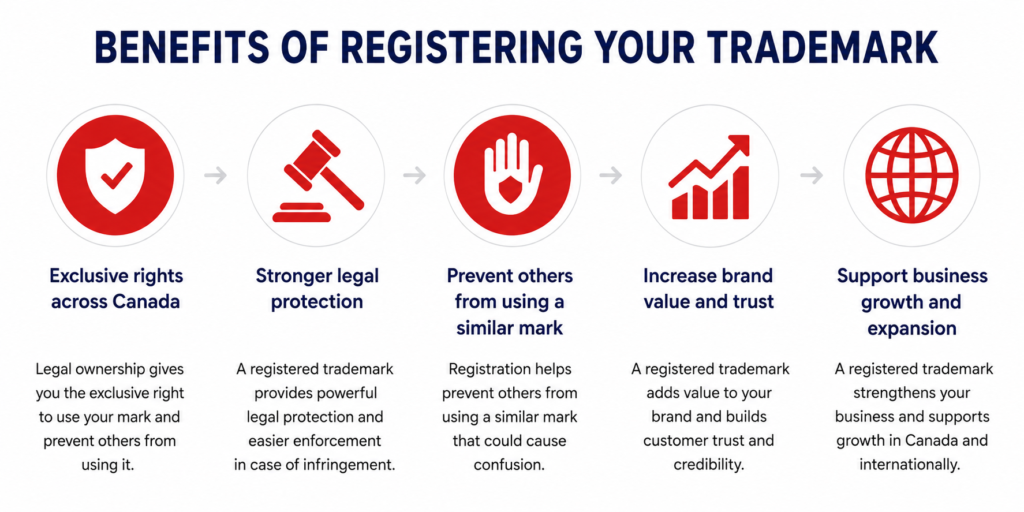
A registered Canadian trademark gives the owner stronger legal rights than relying only on unregistered use. According to CIPO, registration gives the owner the sole right to use the trademark across Canada for 10 years, and the registration can be renewed every 10 years after that.
Official source: CIPO explains the basics of Canadian trademarks in its Trademarks guide.
Who Can Register a Trademark in Canada?
Individuals, companies, organizations, and foreign applicants can apply to register a trademark in Canada. A business does not need to be incorporated in Canada to seek Canadian trademark protection, but the application must include accurate applicant details and a clear list of goods or services.
Foreign businesses often register trademarks in Canada when they sell products, provide services, plan expansion, work with distributors, or want stronger protection against confusingly similar marks in the Canadian market.
How to Register a Trademark in Canada
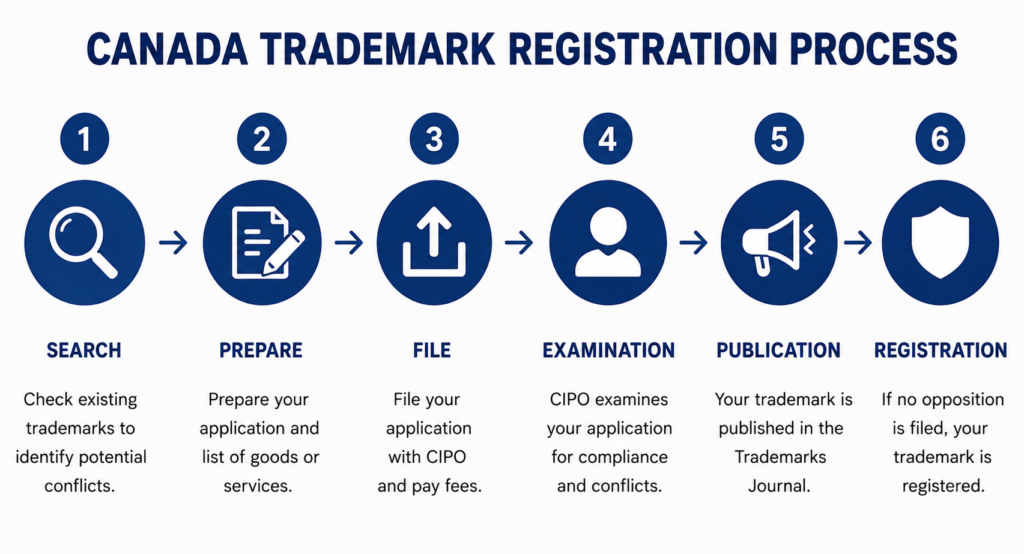
To register a trademark in Canada, you need to check whether the mark is available, prepare the application, file it with CIPO, respond to any examination issues, pass the publication stage, and complete registration. Each step affects the strength and success of the application.
Step 1. Conduct a Trademark Search
A trademark search helps identify identical or similar marks that may create a conflict. This step is not just about finding the exact same name. It should also consider similar spellings, similar meanings, related goods or services, and marks that may be confusingly similar.
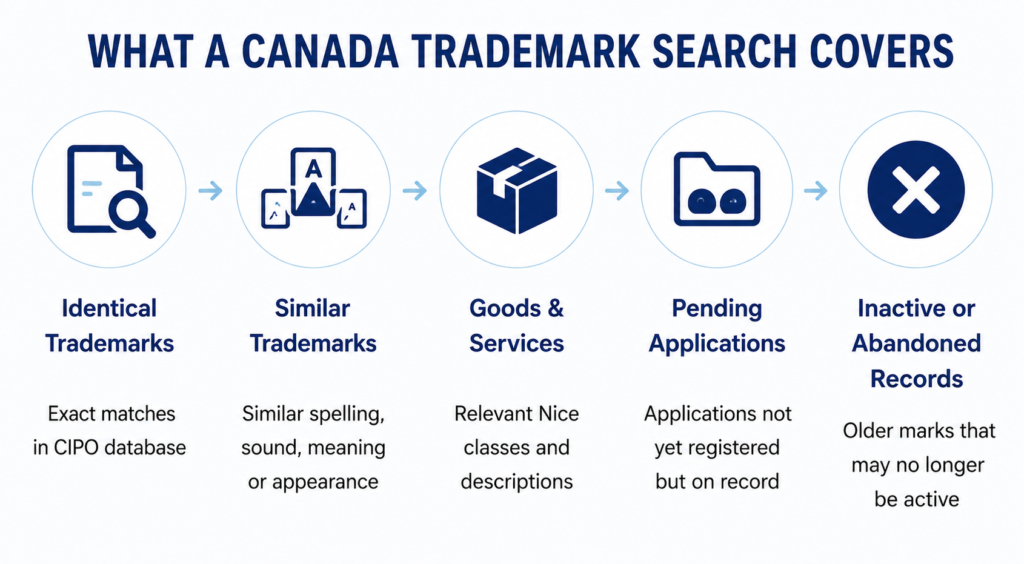
You can search Canadian trademark records through CIPO, but a basic database search may not catch every risk. For a more practical pre-filing review, Bonamark offers a dedicated Canada trademark search service before filing.
Step 2. Prepare the Application
A Canadian trademark application should include the applicant’s name and address, the trademark itself, and a clear description of the goods or services connected with the mark. The goods and services must be classified properly under the Nice Classification system.
This step matters because vague, overly broad, or inaccurate goods and services descriptions can lead to objections, delays, or additional costs. The application should match how the trademark is or will be used in business.
Step 3. File the Application with CIPO
Trademark applications in Canada are filed with CIPO. Online filing is usually the standard option and has lower official fees than filing by other means. CIPO lists its trademark services, including trademark search, application filing, amendments, renewals, and related services, on its official trademarks portal.
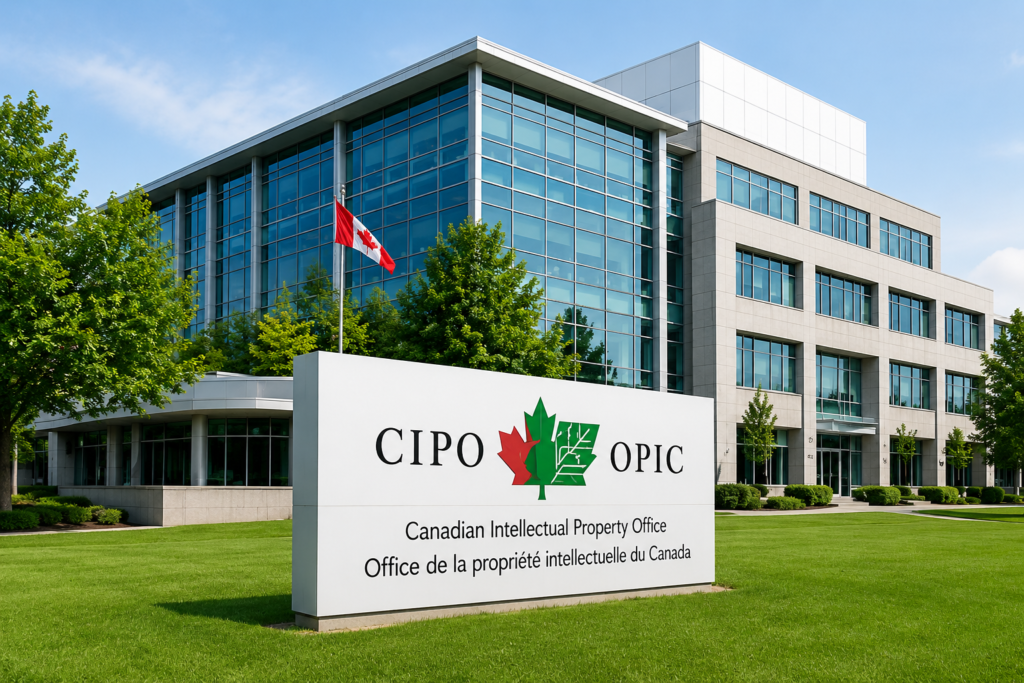
Official source: CIPO provides access to trademark services through its trademarks section.
Step 4. Examination and Publication
After filing, CIPO examines the application. The examiner may review whether the trademark is distinctive, whether the goods and services are described properly, and whether the mark conflicts with prior trademarks. If CIPO raises an issue, the applicant may need to respond to an examiner’s report.
If the application is accepted, it is published in the Canadian Trademarks Journal. During the publication period, third parties may oppose the application if they believe the trademark should not proceed to registration.
Official source: CIPO describes the application review stages in How your trademark application is processed.
Step 5. Registration
If no opposition is filed, or if any opposition is resolved, the application can proceed to registration. Once registered, the trademark gives the owner exclusive rights in Canada for the listed goods or services.
A Canadian trademark registration is valid for 10 years and can be renewed for additional 10-year terms. CIPO provides online services for registration-related steps and renewals.
How Much Does Trademark Registration Cost in Canada?
The official government filing fee in Canada depends on the number of classes in the application and how the application is filed. For an online trademark application submitted through CIPO, the 2026 official fee is CAD $491.06 for the first class of goods or services and CAD $149.04 for each additional class.
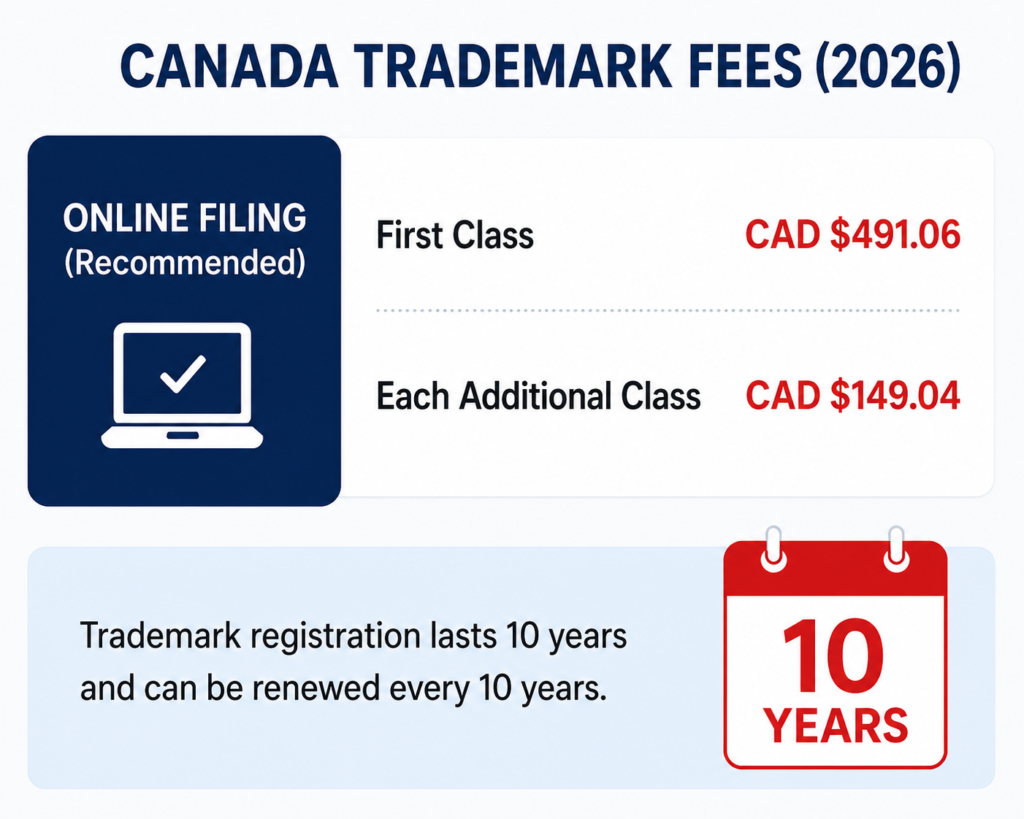
| Fee Type | 2026 Official CIPO Fee |
|---|---|
| Online application, first class | CAD $491.06 |
| Online application, each additional class | CAD $149.04 |
| Non-online application, first class | CAD $640.10 |
| Non-online application, each additional class | CAD $149.04 |
Official source: CIPO publishes current government fees on its Fees for trademarks page.
The total cost may be higher if you use professional assistance, order a professional trademark clearance search, file in multiple classes, or need to respond to objections. Bonamark’s professional filing service for Canada starts from the pricing shown on our Trademark Registration in Canada page.
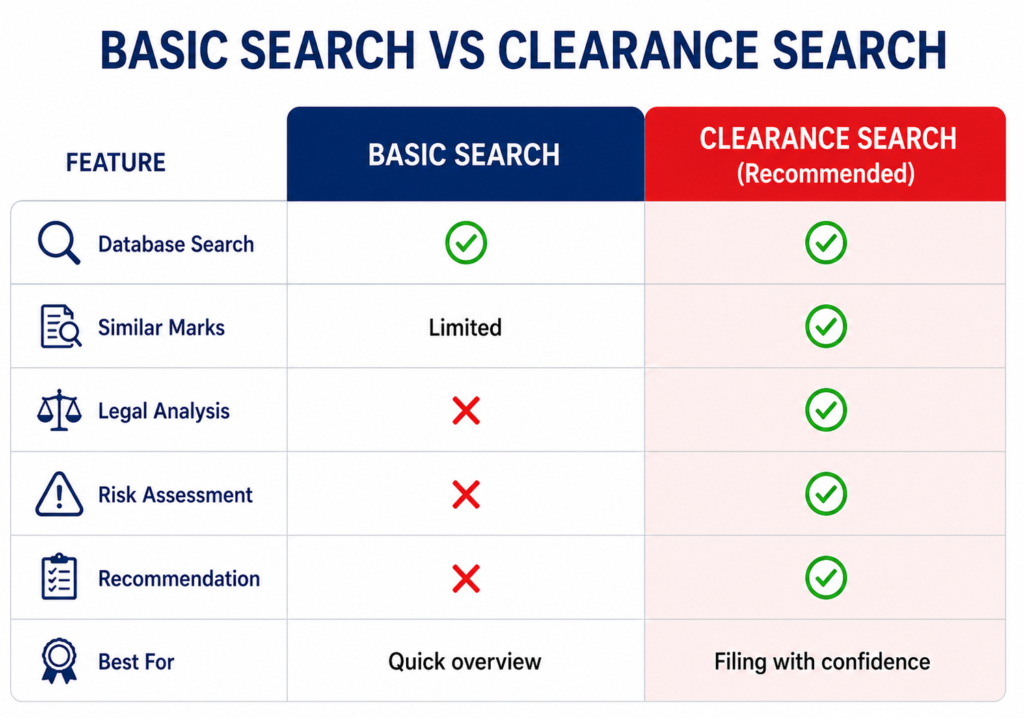
Government filing fees are fixed, but the type of trademark search you choose before filing can have a significant impact on the success of your application. A basic database search only checks for identical marks, while a professional clearance search evaluates similar trademarks, legal risks, and the likelihood of registration.
The comparison below explains the difference between a basic search and a clearance search.
How Long Does It Take to Register a Trademark in Canada?
The time needed to register a trademark in Canada depends on examination timing, the complexity of the application, possible objections, and whether any opposition is filed. As of June 2026, CIPO’s trademark page states that the forecasted wait time for examination is approximately 7.9 months for applications filed during that month.
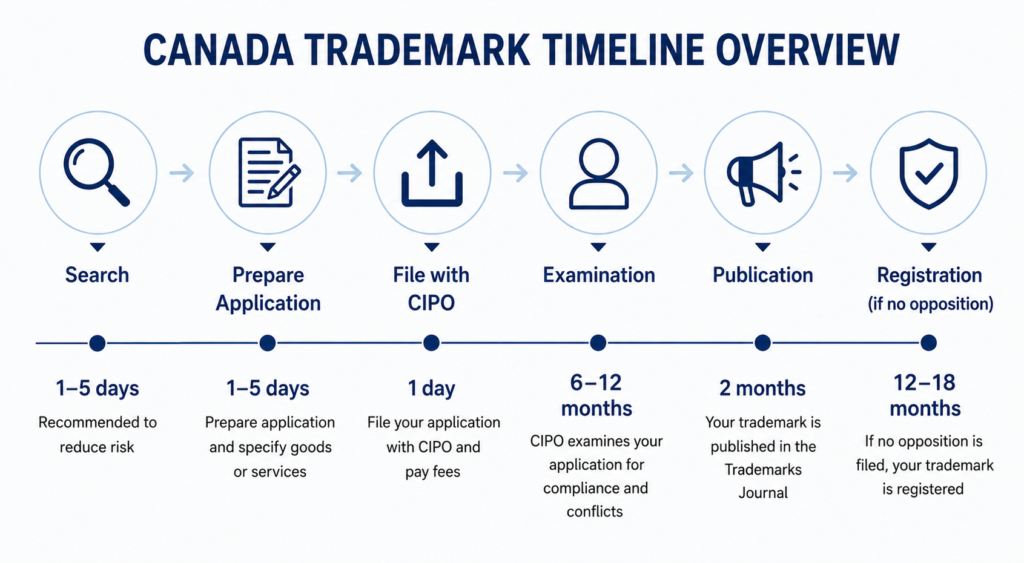
That examination forecast is not the full registration timeline. The complete process may take longer because the application still needs to be examined, possibly corrected or argued, published, and allowed to proceed to registration.
Can You Trademark a Business Name in Canada?
Yes, a business name can be registered as a trademark in Canada if it functions as a trademark and meets the legal requirements for registration. A company name, trade name, or brand name is not automatically protected as a trademark simply because the business is registered.
This is an important distinction. Registering a company or business name may allow you to operate under that name, but trademark registration is what helps protect the name as a brand identifier for specific goods or services across Canada.
Why a Trademark Search Is Important Before Filing
A trademark search is important because CIPO may refuse an application if the trademark is confusingly similar to an earlier mark. A search can also reveal practical business risks before you invest in filing, branding, packaging, advertising, or expansion.
A strong search should review not only identical marks but also similar words, related classes, and possible conflicts across connected goods and services. For this reason, many applicants conduct a Canada trademark search before filing the application.
Common Mistakes During Canadian Trademark Registration
Many trademark problems start before the application is filed. The most common mistakes include choosing a weak or descriptive mark, skipping a proper search, using vague goods and services descriptions, filing in the wrong classes, or assuming that business name registration is the same as trademark protection.
| Mistake | Why It Matters |
|---|---|
| Skipping a trademark search | Conflicting marks may cause refusal, opposition, or rebranding costs. |
| Using vague goods or services | CIPO may issue an objection and request clarification. |
| Filing only a logo when the wordmark is the core brand | Logo protection may be narrower and may not cover later design changes. |
| Confusing a business name with a trademark | Business registration does not automatically create national trademark protection. |
| Ignoring deadlines | Missed response deadlines can delay or damage the application. |
Should You Hire a Trademark Professional?
You can file a Canadian trademark application yourself, but professional help can reduce avoidable risks. A trademark professional can help with search strategy, goods and services wording, class selection, application filing, and responses to objections.
Professional assistance is especially useful when the mark is important to your business, when you plan to file in several countries, when the goods or services are complex, or when a preliminary search reveals possible conflicts.
If you want filing support, Bonamark offers trademark registration services in Canada, including application preparation and filing assistance.
Canada Trademark Registration: Search, Filing, and Guide Pages
Trademark registration in Canada involves several related but different user needs. A business may first need to check availability, then file an application, and later understand the full legal process. For this reason, Bonamark separates these topics into dedicated pages.
| Need | Recommended Page |
|---|---|
| I want to register my trademark in Canada | Trademark Registration in Canada |
| I want to check if my trademark is available | Canada Trademark Search |
| I want to understand the process before filing | How to Register a Trademark in Canada |
Frequently Asked Questions
How much does it cost to register a trademark in Canada?
The 2026 official CIPO online filing fee is CAD $491.06 for the first class and CAD $149.04 for each additional class. The total cost may be higher if you use professional assistance, file in multiple classes, or need to respond to objections.
How long does it take to register a trademark in Canada?
The timeline depends on examination, objections, publication, and opposition. CIPO listed an approximate examination wait time of 7.9 months for applications filed in June 2026, but full registration can take longer.
Can I register a business name as a trademark in Canada?
Yes, a business name can be registered as a trademark if it functions as a brand identifier and meets trademark requirements. Registering a business name alone does not automatically create trademark protection.
Is a trademark search required in Canada?
A trademark search is not always legally required, but it is strongly recommended. It helps identify conflicting marks before filing and can reduce the risk of objections, opposition, and rebranding costs.
Can foreigners register a trademark in Canada?
Yes, foreign individuals and companies can apply for trademark registration in Canada. The application must still meet Canadian trademark requirements and include accurate applicant, mark, and goods or services information.
Can I register a trademark in Canada without a lawyer?
Yes, you can file without a lawyer or trademark agent, but professional assistance may help avoid errors in search, classification, goods and services descriptions, filing, and responses to CIPO objections.
Trademark services in Canada