













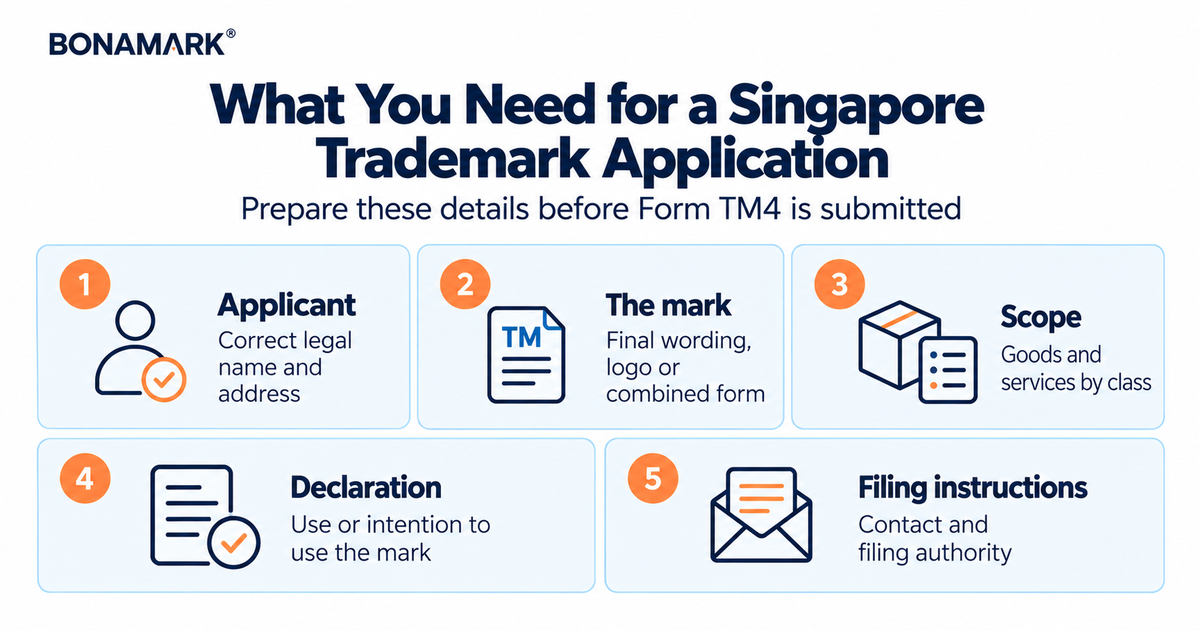
A Singapore trademark application must name the correct owner and show the mark that will be protected. It must also define the relevant products or services. Prepare those details before completing Form TM4 or asking a representative to file.
The IPOS registration guide is the official procedural starting point. The steps below explain the practical decisions that surround the filing.
1. Confirm the Owner and Mark
Use the correct individual or legal entity as applicant. If more than one person or company is involved in the brand, settle ownership before preparing the application.
Choose the version of the brand: words, logo or a combined representation. Use the same artwork throughout review and filing. Tell the filing team about any language version planned for Singapore.
2. Search for Earlier Marks
Start at IPOS Digital Hub and consider a Singapore trademark study when the decision requires more than an initial check. Record the precise wording and design that were searched.
If a close result appears, ask which goods or services overlap and whether further information is needed. Do not assume that adding a generic word to a similar name resolves the issue.
3. Prepare the Specification
Make a list of the products and services the mark will identify. Compare the appropriate descriptions with the IPOS classification database, without allowing the database to substitute for understanding your business.
For example, a software business should explain what it supplies and how customers access it. A generic description of “technology” is not an adequate brief. Ask the filing team to distinguish the relevant activities and classes.
4. Understand the Fee Choice
The official fee schedule distinguishes classes using entirely pre-approved descriptions from other specifications: S$280 versus S$410 per class online. The rate is assessed by class.
Write down the selected classes and the basis for each rate. Ask what the professional quote includes. Confirm whether search work or later responses will be charged separately. Avoid selecting an inaccurate term merely to qualify for a lower fee.
5. Review Form TM4 and Representation
The application states the owner and shows the mark. It also defines the covered products or services and includes a use or intention-to-use declaration. Check that these match the approved instructions.
An overseas business should confirm how service of official correspondence will be handled. If a representative files, confirm who will receive official notices and track the response deadlines. Agree how the representative will obtain your instructions. Keep the submission acknowledgment.
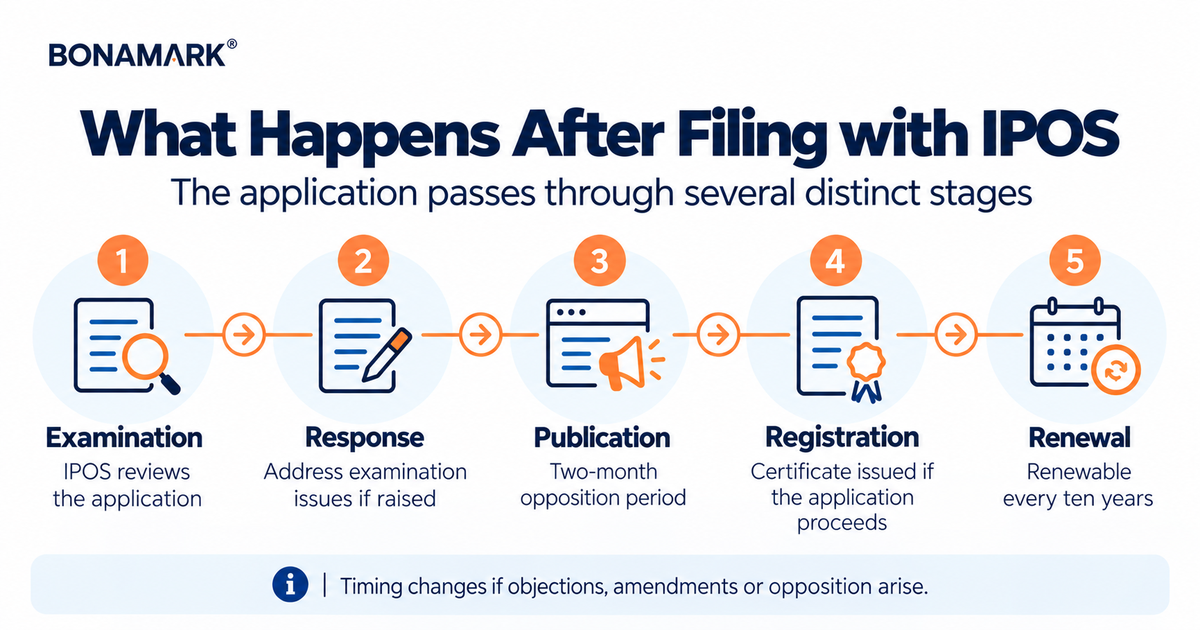
6. Respond to Examination
An examination report may identify issues with the mark or specification. Obtain an explanation of the options and the response deadline. Amendments should be reviewed for their effect on scope before authorization.
The first examination response is not necessarily the end of the procedure. Keep a record of each notice and reply alongside the original filing.
7. Follow Publication and Opposition
If accepted, the application appears in the Trademarks Journal for a two-month opposition period. Publication gives third parties an opportunity to object; it is not the same as final registration.
If opposition occurs, request a separate explanation of the dispute and costs. If the application can proceed, review the resulting certificate and store it with the file.
8. Manage the Registered Mark
Singapore registrations are renewable in ten-year periods. Maintain a calendar for renewal, owner changes and portfolio reviews. Check the scope before assuming an old filing covers a changed product or a new version of the logo.
For expansion elsewhere, identify each target territory. A Singapore registration does not operate as a Southeast Asia-wide registration. The appropriate international strategy depends on the owner and existing filings.
Before You Ask Bonamark to File
- Approve the owner’s legal name and the final mark.
- Review the search findings and remaining questions.
- Confirm the goods or services and classes.
- Understand both official and professional charges.
- Agree responsibility for official notices and later maintenance.
Use Bonamark’s Singapore registration service to discuss the prepared scope and request a quote.
{
“@context”: “https://schema.org”,
“@graph”: [
{
“@type”: “FAQPage”,
“@id”: “https://bonamark.com/how-to-register-a-trademark-in-singapore/#faq”,
“mainEntity”: [
{
“@type”: “Question”,
“name”: “What is Form TM4?”,
“acceptedAnswer”: {
“@type”: “Answer”,
“text”: “TM4 is the form used for a direct Singapore trademark registration application.”
}
},
{
“@type”: “Question”,
“name”: “Can the lower official fee apply to every application?”,
“acceptedAnswer”: {
“@type”: “Answer”,
“text”: “Only classes using entirely pre-approved descriptions qualify for the S$280 online rate. Other classes use the S$410 rate.”
}
},
{
“@type”: “Question”,
“name”: “Is publication the same as registration?”,
“acceptedAnswer”: {
“@type”: “Answer”,
“text”: “No. Publication opens the opposition period. The application must then be able to proceed to registration.”
}
},
{
“@type”: “Question”,
“name”: “What should an overseas applicant confirm?”,
“acceptedAnswer”: {
“@type”: “Answer”,
“text”: “Confirm the representation and local service-address arrangements, and who will receive and act on official correspondence.”
}
}
]
}
]
}
Frequently Asked Questions
What is Form TM4?
TM4 is the form used for a direct Singapore trademark registration application.
Can the lower official fee apply to every application?
Only classes using entirely pre-approved descriptions qualify for the S$280 online rate. Other classes use the S$410 rate.
Is publication the same as registration?
No. Publication opens the opposition period. The application must then be able to proceed to registration.
What should an overseas applicant confirm?
Confirm the representation and local service-address arrangements, and who will receive and act on official correspondence.
Trademark services in Singapore