

















A Statement of Use (SOU) is a required USPTO filing that proves your trademark is actively used in commerce. Without an accepted Statement of Use, an intent-to-use trademark application cannot proceed to registration.
A Statement of Use confirms that a trademark is actively used in commerce and is one of the final steps before registration. Invalid specimens, missed deadlines, or filing mistakes can delay registration or lead to abandonment.
If you are looking for a simpler overview, read our guide explaining what a Statement of Use is and when it is required.
Statement of Use — key facts
- Required for intent-to-use trademark applications
- Filed after a Notice of Allowance, unless use is claimed earlier through an Amendment to Allege Use
- Costs $150 per class
- Requires a valid specimen of use
- Must be filed within strict USPTO deadlines
- Extensions may be available if the mark is not yet in use
What is a Statement of Use?
A Statement of Use is a filing submitted to the USPTO to confirm that a trademark is actually being used in commerce for the goods or services listed in the application.
It is required for intent-to-use applications because those applications are filed before the trademark is used commercially. The SOU is the step that turns a planned use into proven use.
A Statement of Use is not just a formality. If the USPTO does not accept the filing, registration may be delayed, refused, or abandoned.
When do you need to file a Statement of Use?
You normally need to file a Statement of Use after the USPTO issues a Notice of Allowance for an intent-to-use application.
The Statement of Use is the stage where an intent-to-use application transitions from planned use to verified commercial use.
- Initial SOU deadline: usually 6 months from the Notice of Allowance
- Extension requests: available if the mark is not yet in use
- Maximum extension requests: up to 5
- Total possible time after NOA: up to 36 months
Missing the deadline can result in abandonment, which may force the applicant to start over with a new application and new fees.
What is a Notice of Allowance?
A Notice of Allowance means the trademark application has passed examination and publication, but the mark is not registered yet.
A Notice of Allowance is not a registration. It means the USPTO is waiting for proof that the trademark is used in commerce.
What must a Statement of Use include?
A valid Statement of Use must include enough information for the USPTO to review whether the mark is actually used in commerce.
- the required filing fee for at least one class
- at least one valid specimen of use
- a signed declaration or verification
- the date of first use anywhere
- the date of first use in commerce
- confirmation that the mark is used with the listed goods or services
The USPTO reviews these elements to determine whether the trademark is genuinely used in commerce for the listed goods or services. Missing or inconsistent information may trigger an Office Action.
What is a specimen of use?
A specimen of use is real-world evidence showing how the trademark is used in commerce. It must connect the mark to the specific goods or services in the application.
| Trademark type | Acceptable examples | Why it matters |
|---|---|---|
| Goods | Product labels, tags, packaging, product photos, point-of-sale displays | The mark must appear in connection with goods that are sold or transported in commerce |
| Services | Website pages, advertisements, brochures, service listings, booking pages | The mark must be used in offering, advertising, or rendering the services |
What makes a specimen invalid?
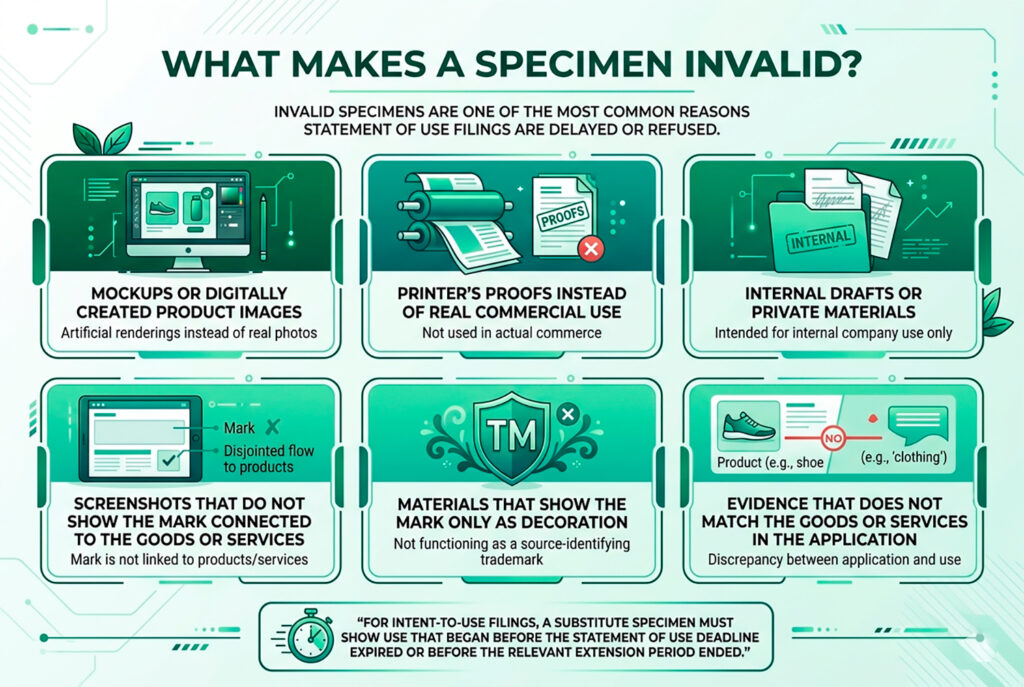
Invalid specimens are one of the most common reasons Statement of Use filings are delayed or refused.
- mockups or digitally created product images
- printer’s proofs instead of real commercial use
- internal drafts or private materials
- screenshots that do not show the mark connected to the goods or services
- materials that show the mark only as decoration, not as a trademark
- evidence that does not match the goods or services in the application
A specimen must show real commercial trademark use, not preparation for future use. Digitally created mockups, internal drafts, or materials that do not connect the mark to actual goods or services are commonly rejected.
For intent-to-use filings, a substitute specimen must show use that began before the Statement of Use deadline expired or before the relevant extension period ended.
Statement of Use vs. Amendment to Allege Use
Both filings are used to show actual use in commerce, but they apply at different stages of the application process.
| Filing | When used | Purpose |
|---|---|---|
| Amendment to Allege Use | Before the application is approved for publication | Claims use before a Notice of Allowance |
| Statement of Use | After the Notice of Allowance | Claims use after approval but before registration |
The correct filing depends on when the trademark becomes active in commerce.
What happens if your Statement of Use is rejected?
If the USPTO finds a problem with the Statement of Use, it may issue an Office Action. The applicant must respond within the required deadline.
Common issues include:
- invalid specimen
- incorrect dates of use
- inconsistent goods or services
- specimen does not show trademark use
- missing declaration or required information
If the issue is not corrected, the application may be refused or abandoned.
Real-world scenario: rejected Statement of Use
A business files an intent-to-use trademark application for a product that is not yet launched. After receiving a Notice of Allowance, it submits a digitally created product mockup as the specimen.
- The USPTO may reject the specimen
- The applicant may receive an Office Action
- The registration timeline can be delayed by several months
- If the deadline cannot be satisfied with a valid specimen, the application may be abandoned
This is why a specimen should be prepared from real commercial use, not from design drafts or planned packaging.
Can you extend the Statement of Use deadline?
Yes. If the trademark is not yet in use, you can request an extension of time to file the Statement of Use.
- Each extension lasts 6 months
- Each extension costs $125 per class
- Up to 5 extensions may be available
- The total extension period can reach up to 36 months from the Notice of Allowance
Extensions help applicants avoid abandonment when launch or commercial use is delayed.
What is an insurance extension request?
An insurance extension is an extension request filed with, or shortly after, a Statement of Use within the same six-month period.
It can preserve additional time if the Statement of Use turns out to be deficient. This can be useful when the applicant is not fully certain whether the specimen will be accepted.
However, it also increases cost, so it should be used strategically rather than automatically.
How long does the Statement of Use process take?
The review timeline depends on USPTO processing speed, application quality, and whether the filing triggers an Office Action.
- A clean SOU may still take time to move through review
- An Office Action can add several months
- Invalid specimens or missed deadlines can significantly delay registration
Current process note: Statement of Use filings may be affected by USPTO processing backlogs. Even a properly filed SOU may take time to be reviewed.
What happens if you miss the Statement of Use deadline?
If you do not file a Statement of Use or an extension request on time, the application may be abandoned.
- USPTO fees are generally not refunded
- The application may no longer proceed to registration
- A petition to revive may be possible only within a limited period
- If revival is not available, a new application may be required
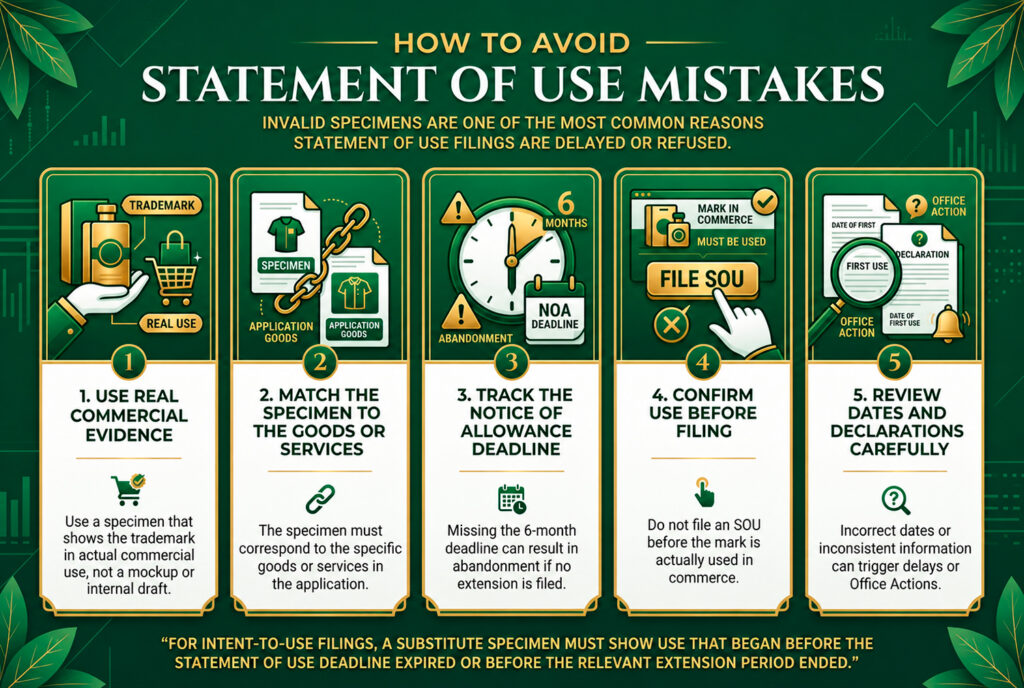
How to avoid Statement of Use mistakes
1. Use real commercial evidence
Use a specimen that shows the trademark in actual commercial use, not a mockup or internal draft.
2. Match the specimen to the goods or services
The specimen must correspond to the specific goods or services in the application.
3. Track the Notice of Allowance deadline
Missing the 6-month deadline can result in abandonment if no extension is filed.
4. Confirm use before filing
Do not file an SOU before the mark is actually used in commerce.
5. Review dates and declarations carefully
Incorrect dates or inconsistent information can trigger delays or Office Actions.
When should you get help with a Statement of Use?
A Statement of Use is worth reviewing carefully if:
- you are unsure whether your specimen is acceptable
- your product launch has been delayed
- you need an extension strategy
- the USPTO has already issued an Office Action
- your filing includes multiple classes
Professional review can reduce the risk of refusal, delay, or abandonment.
Conclusion
A Statement of Use is a critical step in completing an intent-to-use trademark application. It confirms real commercial use and determines whether the application can proceed to trademark registration.
Careful preparation of the specimen, filing dates, declarations, and extension strategy helps reduce the risk of delays, refusal, or abandonment.
Contact Bonamark to ensure your trademark is filed correctly. Our consultants can guide you.
FAQ
Is a Statement of Use mandatory?
Yes. A Statement of Use is required for intent-to-use applications before the trademark can proceed to registration.
How much does a Statement of Use cost?
A Statement of Use costs $150 per class.
What happens if I don’t file a Statement of Use?
Your application may be abandoned if you do not file a Statement of Use or an extension request on time.
Can I extend the Statement of Use deadline?
Yes. You can request extensions if the mark is not yet in use, subject to USPTO limits.
What is the most common Statement of Use mistake?
Submitting an invalid specimen is one of the most common mistakes.
Can I change my specimen later?
In some cases, but it may delay the process and the substitute specimen must meet USPTO timing requirements.
Do I get a refund if the Statement of Use fails?
No. USPTO filing fees are generally not refundable.
Can a mockup be used as a specimen?
No. A mockup usually does not show actual use in commerce and may be rejected.
How many Statement of Use extensions can I file?
You may be able to file up to five extension requests, each providing an additional 6 months.
What happens if the USPTO rejects my Statement of Use?
The USPTO may issue an Office Action, and failure to resolve the issue may lead to refusal or abandonment.
- Trademark registration
- USPTO
- Trademark Filing
- Intent-to-Use
- Statement of Use
- Office Actions
Trademark services in the United States


