













Why Trademarks Are Vital for Modern Wineries and Distributors
In the world of wine, a name is more than a label — it’s history, promise, and reputation poured into every bottle. For wineries, distributors, and wine entrepreneurs, a trademark translates consumer perception into legal and commercial value.
Wine brands face unique challenges:
- Geographic terms and appellations (some protected by law)
- Counterfeiting and imitation on global markets
- Naming conflicts with historic producers
- Cross-border enforcement complexities
A strategic trademark plan safeguards not only your brand’s identity, but its ability to grow, export, and endure.
🍇 The Risks Without Trademark Protection
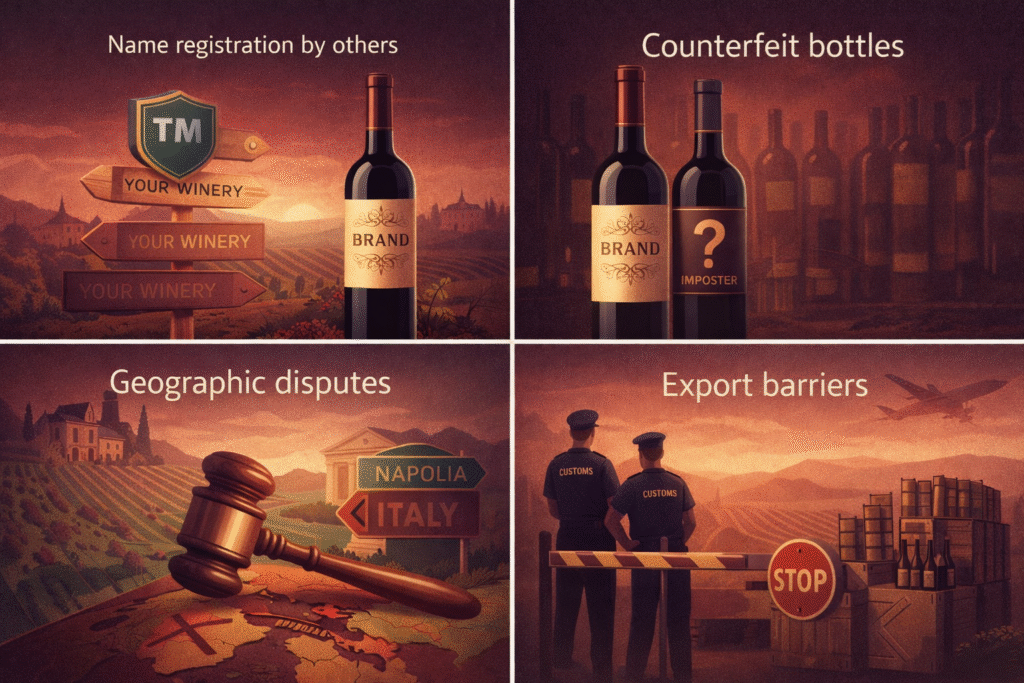
Without proactive trademark protection:
- Another winery could register your name or a confusingly similar name in key export markets.
- Imitators may bottle low-quality wine under a similar label, damaging your reputation.
- Legal conflicts over geographic terminology can sink launches in certain jurisdictions.
Wineries often rely on heritage and storytelling — intangible assets that earnings reports can’t capture, but that trademark law absolutely defends.
🍾 Trademark Essentials for Wine Brands
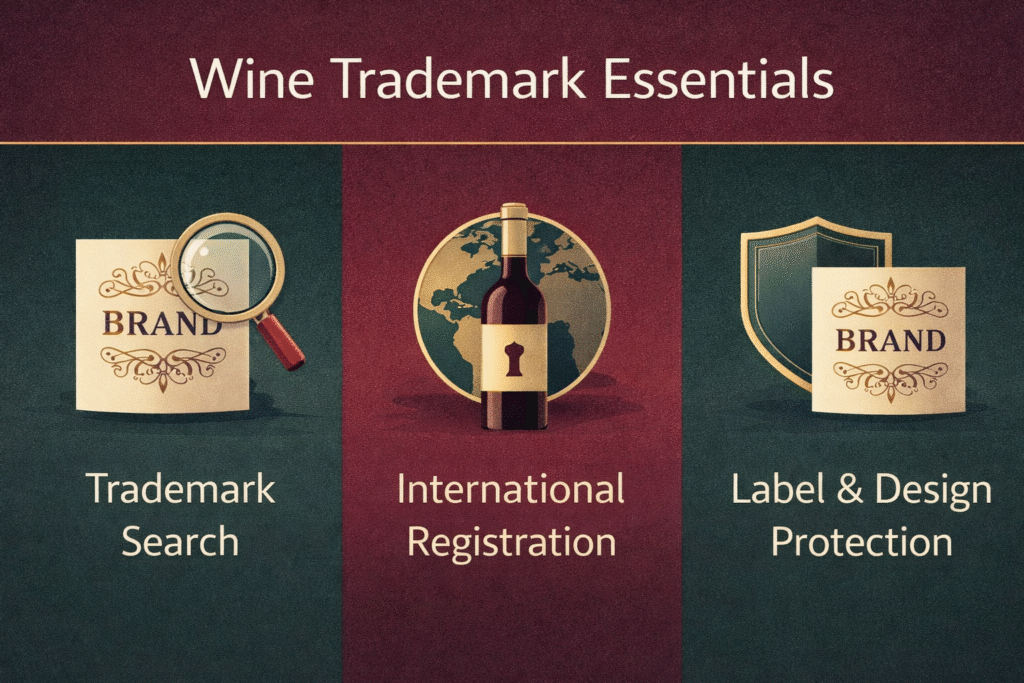
Bonamark’s wine trademark strategy starts with:
1. Comprehensive name and label searches
We search trademark registers globally to ensure your proposed winery name, wine series names, and label designs don’t infringe existing rights and are registerable in key markets.
2. International trademark registration
Wine brands are export-oriented. Protecting your name in major markets — from the EU and U.S. to Asia and Australia — prevents others from pre-empting your brand expansion.
3. Design protection
Your label design is often the most recognizable part of your brand. Bonamark helps secure trademark rights not just in the name, but in visual designs, logos, and even series or varietal designators.
🌍 Geographic Terms and Appellations
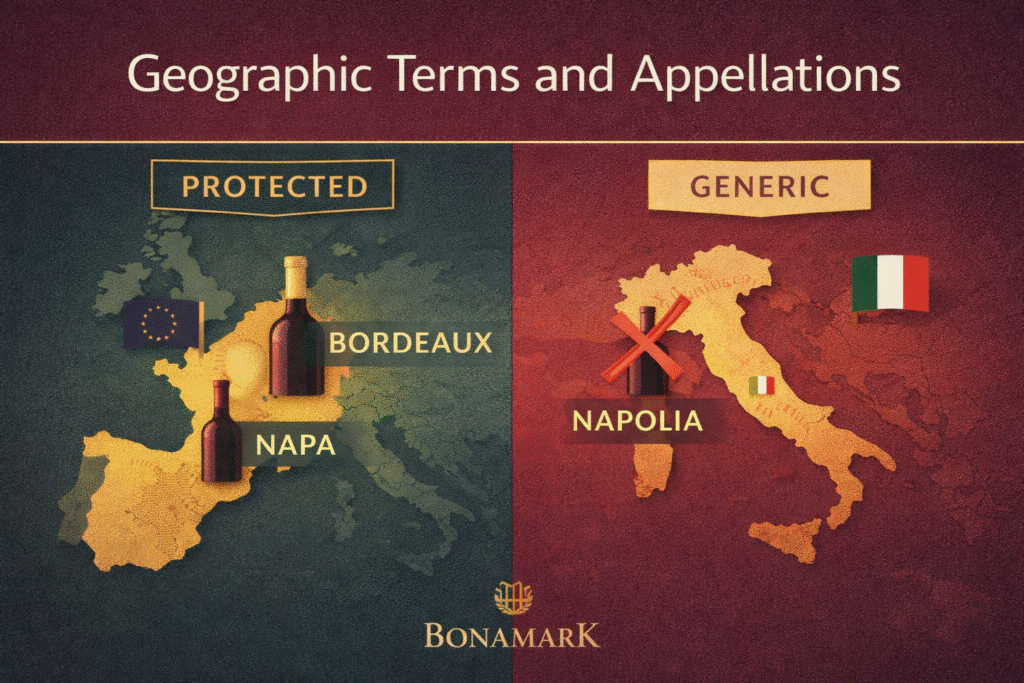
Wine trademarks often intersect with geographic terms — names tied to regions like Bordeaux, Napa, or Chianti. These terms can be:
- Protected under appellation laws
- Restricted or regulated in certain markets
- Difficult to register as trademarks if too generic
Bonamark’s trademark attorneys understand how geographic and appellation rules differ by jurisdiction and tailor applications accordingly — protecting your identity while respecting local laws.
Final Takeaway
Wine trademarks protect a winery’s story, reputation, and export potential. Strategic international protection ensures your brand remains exclusively yours in every market.
Why is trademark protection critical for wine brands?
Wine brands rely heavily on their name, label, and regional identity. Trademark protection helps prevent copycats, protect export rights, and preserve brand value in competitive international markets.
How do geographic indications affect wine trademark registration?
Geographic indications (GIs) protect region-based names such as appellations. A trademark that conflicts with a protected geographic term may face refusal or legal challenges in certain jurisdictions.
What is the difference between a trademark and a geographic indication?
A trademark protects a specific brand owned by one company, while a geographic indication refers to products linked to a particular region and may be used by multiple producers who meet defined standards.
Can a wine brand use regional names in its trademark?
It depends on the jurisdiction and the level of protection granted to that geographic term. Some regional names are strictly protected and cannot be monopolized as private trademarks.
What are the main trademark risks for wineries expanding internationally?
Key risks include name conflicts in foreign markets, counterfeit products, refusal due to geographic terms, and delays caused by improper clearance before export.
Why is international trademark registration important for wineries?
Wine is frequently exported across multiple countries. Because trademark rights are territorial, protection must be secured in each target market before large-scale distribution.
Can wine labels and bottle designs be protected?
Yes. In addition to the brand name, wineries can protect label designs, logos, and distinctive visual elements to strengthen brand identity and prevent imitation.
Is trademark protection a one-time step for wine producers?
No. Ongoing monitoring and enforcement are essential to prevent infringement, especially in markets where counterfeiting or parallel imports may occur.
- Wine Trademark Protection
Trademark services in the United States