













To register a trademark in the UAE, file an application with the Ministry of Economy and Tourism. Confirm the correct owner and the exact mark before preparation begins. The application must also define the products or services it will cover.
This guide focuses on preparing for a direct national application. If you want professional help with the filing, see Bonamark’s UAE trademark registration service.
1. Decide Who Will Own the Trademark
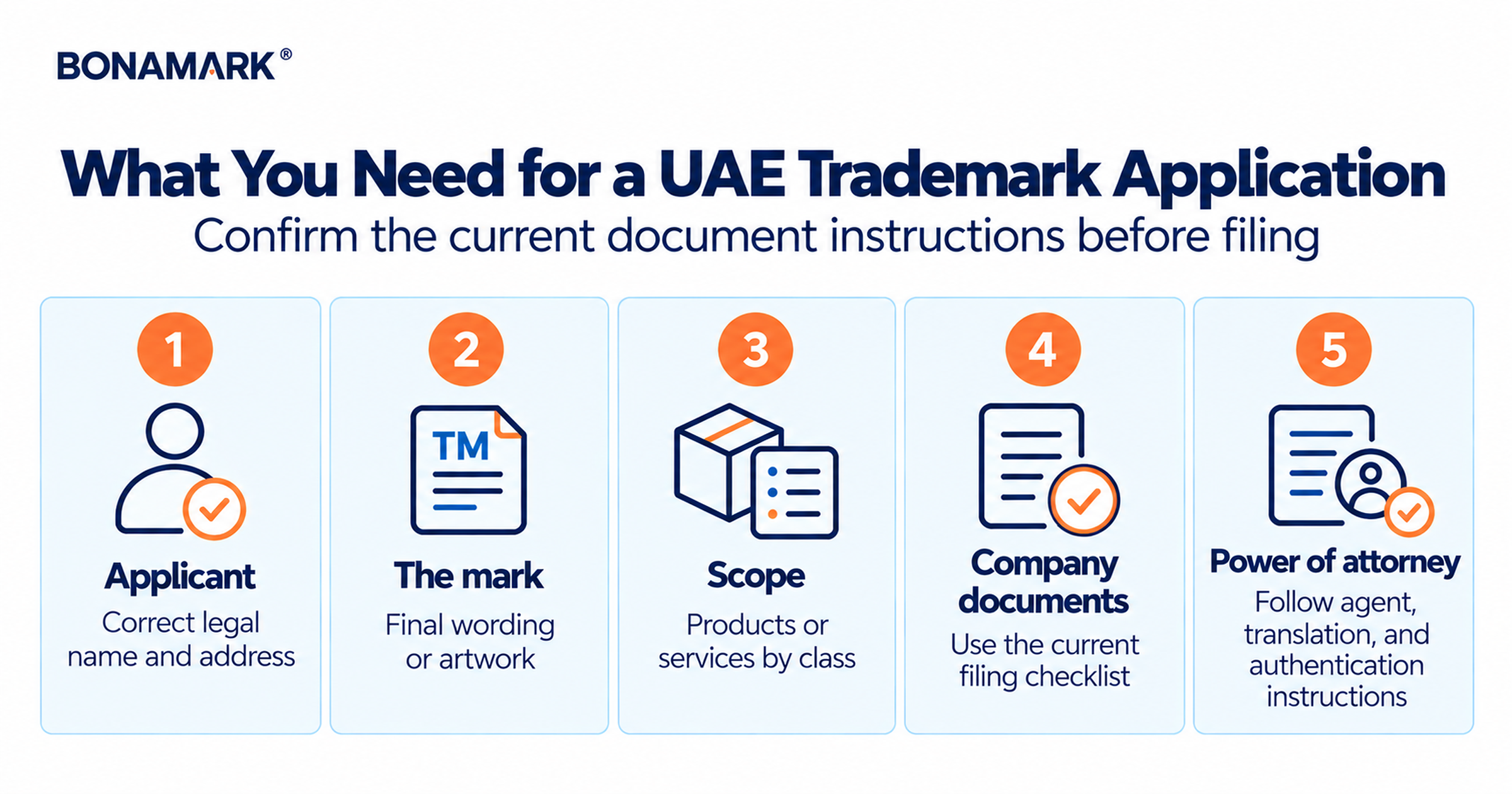
Start with the intended owner’s legal name. A founder, operating company, distributor and parent company are different possible owners; choose deliberately instead of treating the name field as an administrative detail.
For example, a business expanding through a local distributor should settle who will own the brand before preparing the application. The party handling sales is not automatically the intended trademark owner. Make sure the application and any authorization documents identify the same entity.
Choose the version of the brand
Choose the word, logo or combined design you want to protect. Provide the current artwork and wording, including any language version intended for the market. If the design is still changing, resolve that before authorizing the filing.
2. Define the Goods and Services
Describe the actual products and services offered under the mark. A broad phrase such as “online business” is less useful than a list explaining what customers buy from you.
Create a short inventory of present products, planned services and realistic expansion areas. Ask the filing team to map that inventory to the appropriate classes and acceptable wording. Do not assume that protecting one activity automatically covers everything the business may sell later.
A useful brief distinguishes the product brand from the business that sells it. For instance, branded products and retail services may need separate consideration. The final scope should follow the business model and the agent’s assessment.
3. Review Availability Before You File
Arrange a UAE trademark search and give the reviewer your wording, design and goods or services. Include any records or earlier checks you already have, so the assessment can focus on unresolved questions.
WIPO’s pre-filing guidance recommends searching existing and pending trademarks in the target markets. The point is to support a filing decision, not simply to obtain a list of names.
Read the result with its scope in mind. If a record looks relevant, ask what further details are needed. If the result is encouraging, ask what risk remains and how soon you should decide on filing. Keep a copy of the report with the date and the version of the mark searched.
4. Prepare the Documents and Representation
Check the official registration requirements before assembling the file. For a national application by an owner outside the UAE, appoint a registration agent and obtain instructions for the power of attorney, authentication and legal translation.
Do not commission paperwork from an old checklist. Send the agent the owner’s country and entity details first, then confirm the required process. Ask which steps you handle, which the representative handles and which costs are separate.
Vladimir Isaev’s account of UAE document legalization explains why document preparation deserves attention early. Treat historical costs in that article as background; request current instructions and an itemized quote.
- Confirm the owner’s legal name and address.
- Provide the selected mark representation.
- Finalize the goods and services with the filing team.
- Arrange the required corporate and authorization documents.
- Review all names and spellings before submission.
5. Review and Submit the Application
Before authorizing submission, ask to review the mark, owner and goods or services together. An accurate form is more valuable than correcting a preventable mismatch later.
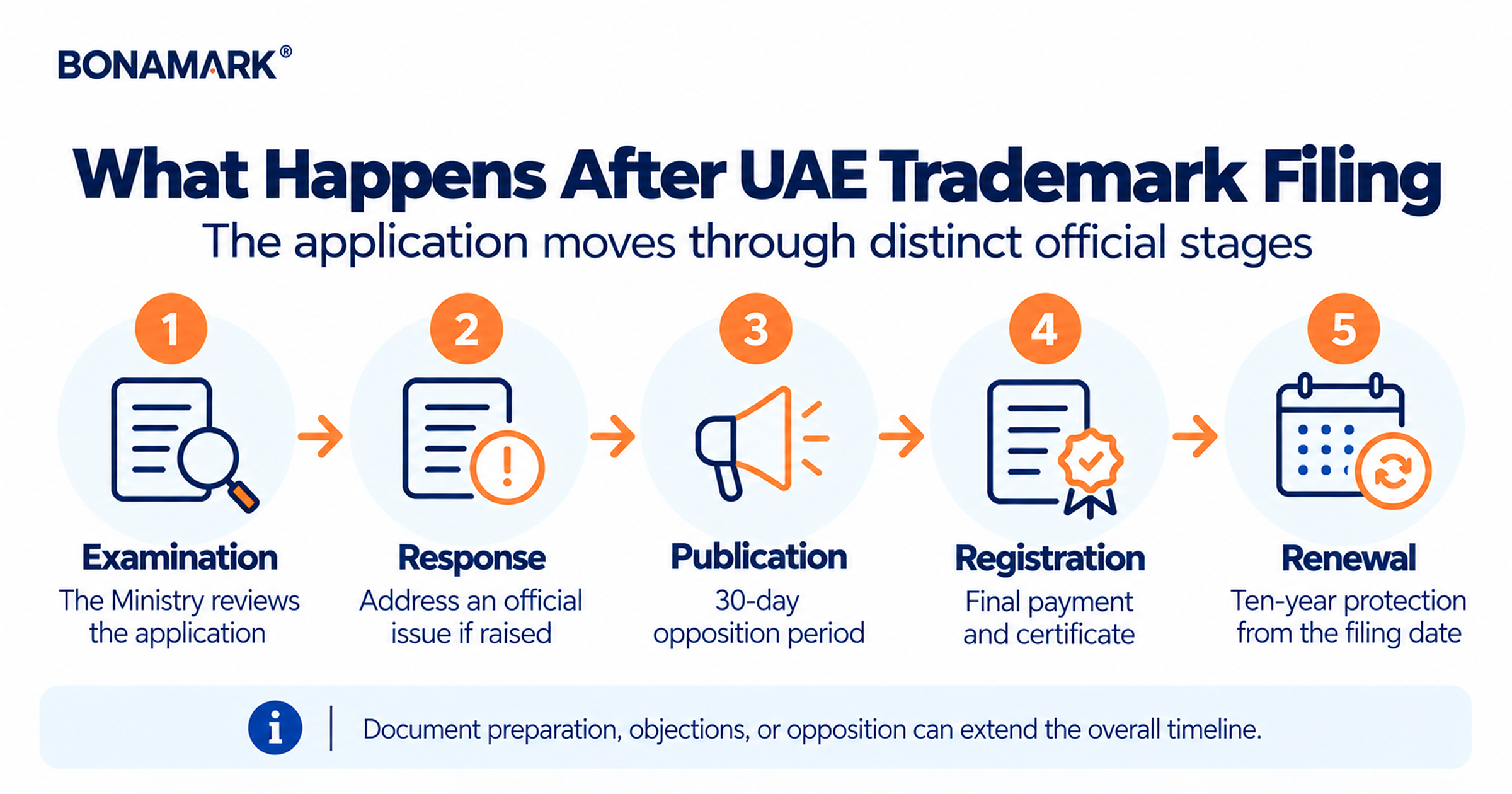
Keep the filing acknowledgment, application number and payment record. Agree who will receive official correspondence and how requests for action will be passed to you. Filing starts a procedure; it does not itself create a registration certificate.
If the examiner raises a concern
Ask the representative to explain the issue, response options, deadline and additional cost. Avoid treating every query as routine or assuming it can always be fixed. Make the decision using the actual official communication.
6. Follow Publication and Final Registration
For an accepted application, the Ministry procedure provides for publication and a 30-day opposition window. Keep the publication details and ask the agent to confirm the next action date. An opposition requires its own assessment before the application can move forward.
Complete the final payment and registration requirements when instructed. Once the certificate is issued, check the owner, mark and scope against the application. Store the certificate where the people responsible for the brand can retrieve it.
7. Keep the Registration Useful
Under Article 21 of the UAE trademark law, protection lasts ten years from the filing date and can be renewed. Record the filing date and renewal planning dates in your portfolio records instead of relying only on the date you received the certificate.
Keep your business records connected to the trademark file: the owner, the approved brand artwork and the goods or services covered. When the business changes its name, ownership or branding, ask whether trademark records or new applications need attention.
A UAE registration is territorial. Review protection separately when expanding beyond the UAE. If your immediate market is Dubai, the national registration still concerns the UAE; it is distinct from registering a company or obtaining a business license.
Build a Complete Budget Before Starting
For the regular national route, the current Ministry charges total AED 6,500 for a standard one-class trademark: AED 750 examination, AED 750 publication and AED 5,000 final registration. The registration service page separates these official charges from the wider filing budget.
Request a quote that answers these practical questions:
- Which mark and classes does it cover?
- Is a search included, and at what scope?
- Which government and professional fees are payable now and later?
- Who pays for document authentication, translation and delivery?
- What work would be charged separately if the application encounters an objection or opposition?
For scheduling, separate document preparation from the official procedure. The Ministry currently targets 20 working days for a standard examination decision. Publication, opposition, and final registration come afterward.
Before You Authorize Filing
- The intended owner has been agreed.
- The final brand wording and artwork have been reviewed.
- The scope reflects the products or services you need to protect.
- Search findings and limitations have been discussed.
- The documents follow the current agent instructions.
- The quote identifies both initial and later payments.
- Someone is responsible for correspondence and deadlines.
Frequently Asked Questions
Can I complete UAE trademark registration entirely by myself from abroad?
For a direct national filing, the Ministry requires an owner outside the UAE to use a registration agent. Prepare the required power of attorney with the agent’s instructions.
Should I decide on the owner before applying?
Yes. Confirm which individual or legal entity should hold the rights. Check that the same owner details appear consistently in the application and supporting documents.
Should my search include a logo?
Tell the reviewer if you intend to file a logo or combined mark. A word search should not be treated as a complete assessment of the visual elements.
What happens after publication?
A third party has a 30-day period to oppose. If the application can proceed, complete the final registration requirements and check the issued certificate.
Does paying the first fee mean the trademark is registered?
No. Filing and examination are earlier stages. Publication, any opposition issues and the final registration steps still need to be completed.
How long does UAE trademark protection last?
The UAE trademark law provides a ten-year protection period calculated from the application filing date, renewable for further periods subject to the applicable requirements.
Trademark services in the UAE