














Luxury is built on perception. Craftsmanship, heritage, and storytelling all matter — but what ultimately holds a luxury house together is something less visible: intellectual property.
To make sure your luxury house remains exclusive, you must treat your IP not as a back-office task, but as the foundational wealth of your enterprise. In the high-end fashion and luxury sector, your value lives within your brand identity and its unique aesthetics. Without legal preventive measures, you risk your visibility being hijacked in search results by others trying to profit from your reputation.
In industries like perfume, jewelry, premium alcohol, and designer accessories, the product can be admired — but the brand is what is desired. And that brand must be legally secured.
Luxury Brands Are Prime Targets for Imitation
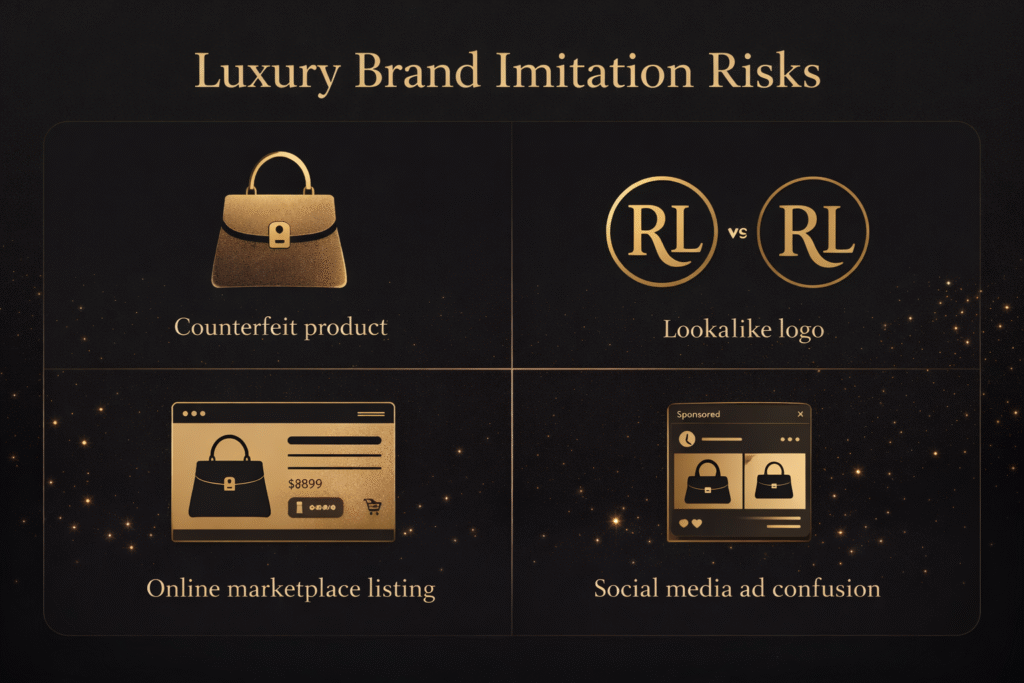
Success in luxury inevitably attracts imitators. Counterfeiters, copycat designers, and unauthorized sellers look for ways to ride the wave of a brand’s prestige.
But modern infringement is not always happening in street markets — it happens online, in search engines, social platforms, and digital marketplaces. A confusingly similar brand name or lookalike product listing can divert customers before they ever reach your official channels, making proactive trademark monitoring essential.
When imitators strike, many creators mistakenly turn to standard marketplace support. These systems are frequently governed by AI, which lacks the human touch to resolve complex disputes or understand the specific prestige of a luxury label. Instead of getting stuck in automated loops, luxury brands should utilize the law as their shield — skipping the endless back-and-forth with platforms that treat heritage maisons and mass sellers the same way.
Legal rights give you leverage that algorithms simply don’t.
Why Trademark Protection Is the Core of Luxury Brand Security
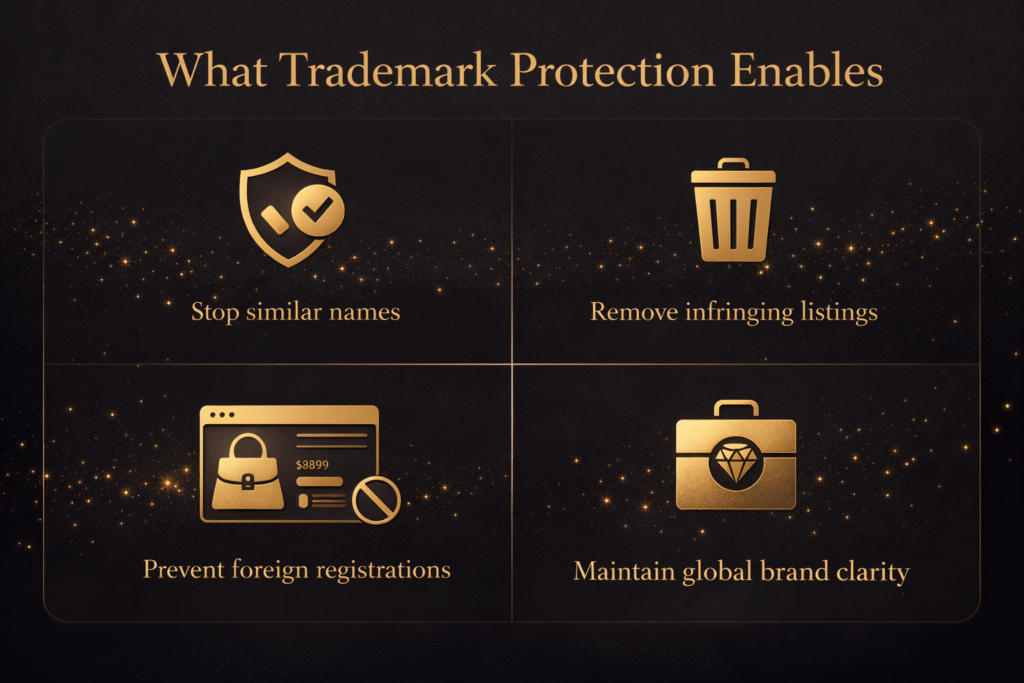
Luxury thrives on distinctiveness. A name, a logo, a symbol, even a signature packaging style can become globally recognized. But without proper trademark registration, those elements may not be legally enforceable.
Strong trademark protection allows a luxury house to:
- Stop others from using confusingly similar names
- Remove infringing products from online platforms
- Prevent unauthorized registrations in foreign markets
- Maintain brand clarity across global distribution
In the luxury space, trademark rights are not just defensive — they are a strategic business asset tied directly to valuation and long-term brand equity.
A Fresh Perspective on Securing Your Luxury Empire
Be proactive as a brand, while your in-house creative team remains focused on the next collection or release. Intellectual property strategy should run in parallel with design, not after it.
To do that, we advise:
• Avoiding Blind Filings
An attorney-led trademark search identifies potential risks with existing marks and shows your actual chances of a successful registration. Filing without this step can lead to refusals, disputes, or weak protection.
• Taking Care of Full Coverage
Beyond the brand name, luxury houses should think visually.
Design patents can safeguard the specific visual language and arrangement of elements that make your pieces recognizable — whether it’s a jewelry silhouette, a perfume bottle shape, or a signature clasp on a handbag.
Copyrights provide a secondary layer of protection for original sketches, campaign visuals, packaging artwork, and digital creative works used in global marketing.
• Being Aware of Your Boundaries
Not everything can be owned. Generic terminology — like “Luxury Perfume” or “Gold Bracelet” — can’t be registered as trademarks. Investing in distinctive, non-descriptive names is essential for enforceable and powerful rights.
International Protection: A Must for Luxury Houses

Luxury brands are inherently global. A fragrance launched in Paris, a jewelry line born in Milan, or a premium spirit crafted in Scotland may be sold worldwide within months.
Without international trademark protection, another party can legally register your brand name in a new market before you enter it. Recovering those rights later can be costly — or impossible.
A coordinated global filing strategy ensures that your exclusivity travels with you, protecting your brand identity wherever your clientele may be.
The Bottom Line
In luxury, exclusivity is everything. And exclusivity is enforced not only by craftsmanship and storytelling — but by law.
Treating intellectual property as the foundational wealth of your luxury house ensures that your brand remains rare, recognizable, and legally protected in every market where prestige matters.
FAQ
Why is trademark protection essential for luxury brands?
Luxury brands depend on exclusivity and recognition. Trademark protection helps prevent copycats, preserve brand equity, and support premium positioning across global markets.
What are the most common threats luxury brands face online?
Common threats include counterfeit listings, lookalike logos, unauthorized resellers, and misleading social media ads that confuse consumers and dilute brand value.
Can trademarks help remove counterfeit products from marketplaces?
Yes. Trademark rights can support enforcement actions, including takedown requests and complaints against infringing listings, depending on the platform and jurisdiction.
What parts of a luxury brand can be protected with trademarks?
Typically, brand names, logos, taglines, and sometimes distinctive label or packaging elements can be protected to strengthen brand identity and recognition.
Why do luxury brands need international trademark protection?
Trademark rights are territorial. Luxury brands often sell globally, so protection should be secured in key markets to reduce the risk of foreign filings and enforcement gaps.
Is a trademark search necessary before launching a new luxury collection?
Yes. A clearance search helps identify conflicting marks early, reducing the risk of rebranding, disputes, or refusal during registration.
How does trademark monitoring support long-term luxury brand security?
Monitoring helps detect similar filings and infringement early. This allows brands to respond faster and protect exclusivity before problems escalate.
Is trademark protection a one-time step for luxury brands?
No. Strong protection includes filing, ongoing enforcement, and portfolio maintenance to keep rights active and valuable over time.
- Luxury Trademark Protection
Trademark services in the United States